
Osaka to Tokyo Shinkansen Tickets
Travel directly from Shin-Osaka to Tokyo in about 2 hours 21 minutes on the fastest services, then compare live trains and seats for your date.
2h 30mDuration
515 kmDistance
Every 10 minsFrequency
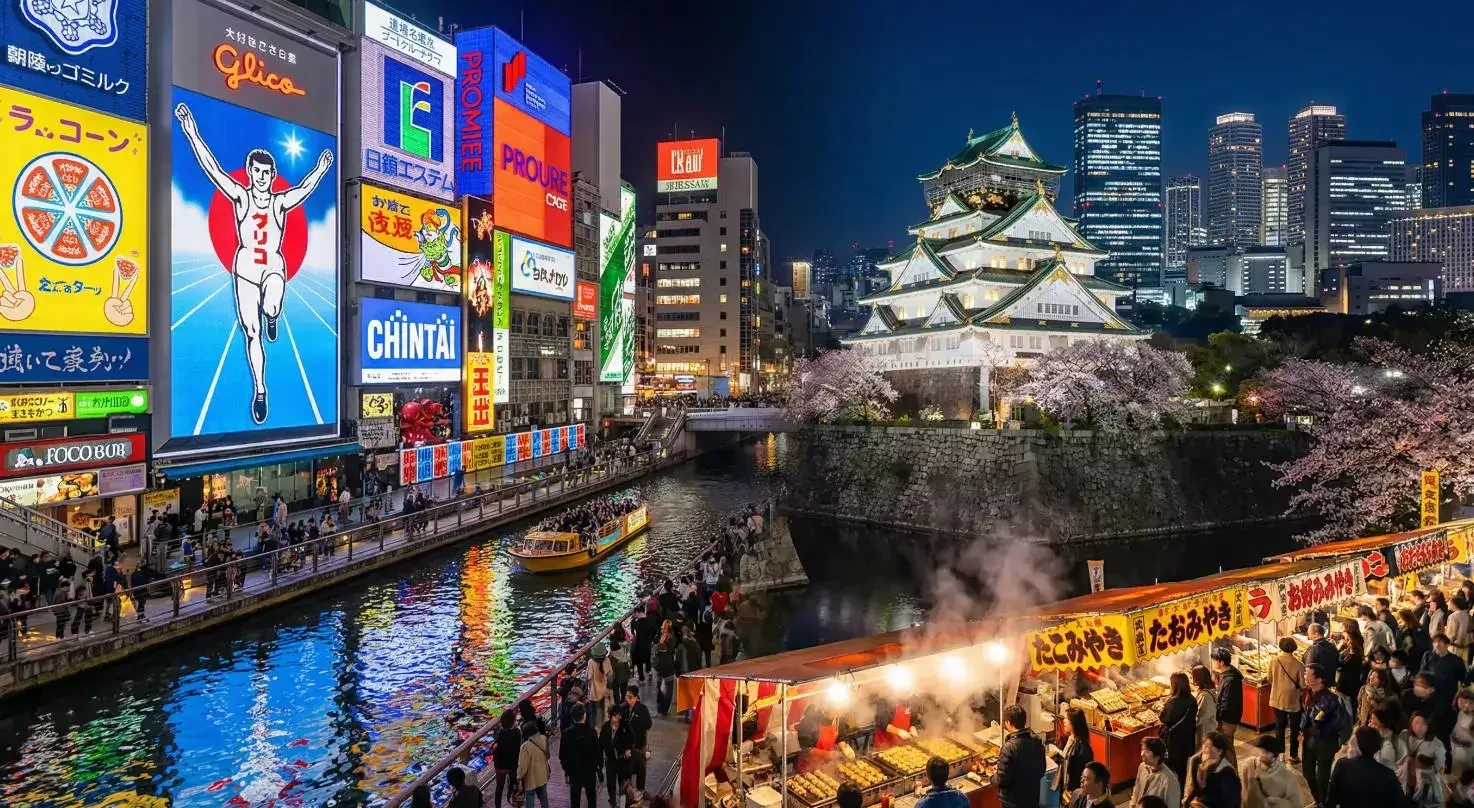
Travel directly from Shin-Osaka to Tokyo in about 2 hours 21 minutes on the fastest services, then compare live trains and seats for your date.
The Tokaido Shinkansen provides a direct high-speed connection from Shin-Osaka to Tokyo. The fastest Nozomi services usually take about 2 hours 21 minutes to 2 hours 30 minutes, with no change of train. Board at Shin-Osaka Station rather than Osaka Station, then choose Tokyo Station for the city centre and northern districts or Shinagawa Station for southern Tokyo and easier access toward Haneda Airport.
Nozomi is normally the best choice when you want the shortest journey and the widest range of departures. Hikari makes more stops and may suit some rail-pass itineraries. Kodama stops at every station on the Tokaido Shinkansen and takes much longer, so it is generally more useful for intermediate destinations than for a direct Osaka–Tokyo journey.
Timetables and available seats vary by date. Search your exact travel day on this page to compare current departure times, journey durations and seat options.
Tokyo-bound Shinkansen trains leave from Shin-Osaka Station, not Osaka Station or Namba. From Osaka/Umeda, use a local JR service to Shin-Osaka. The Osaka Metro Midosuji Line connects Shin-Osaka directly with Umeda, Shinsaibashi and Namba.
Allow extra time for the local transfer, ticket gates and platform. This is especially important during peak periods or when traveling with children or large bags.
Shinagawa is the first Tokyo stop on most services from Osaka. It can be more convenient for Shinagawa, Shibuya, the southern side of the city and connections toward Haneda Airport. Stay on the same train for Tokyo Station if you are heading to Marunouchi, Ginza, Ueno or northern and eastern Tokyo.
Both stations connect with JR lines and local transport. Compare your hotel location and onward route before deciding where to leave the train.
A Shinkansen ticket combines the base fare with a limited-express charge. The final total depends on the train, travel date, reservation status and seat class. An ordinary reserved seat confirms your place, while Green Car offers wider seating and more personal space.
Fares, schedules and inventory can change. Use the live search results for your date to see the current total before payment rather than relying on a planning estimate.
A reserved seat is recommended for weekends, Japanese holidays, busy travel seasons, groups and anyone who needs a specific departure. Booking earlier also gives you a better chance of finding adjacent seats.
If the combined length, width and height of your baggage is over 160 cm, reserve an eligible seat with access to the oversized-baggage area. Keep station transfers and storage space in mind even when your bag is below that threshold.
Traveling from Osaka toward Tokyo, Mount Fuji is generally on the left side of the train. In a typical ordinary-car layout this is the E-seat side. The view appears after the train passes through central Japan and before reaching the Tokyo area.
Cloud, weather and the exact train formation can affect visibility, and a particular seat may not be available. Treat the view as a bonus rather than a guaranteed part of the journey.
Heading to Tokyo, look for Mt. Fuji on your left side (Seat E) approx. 45 mins before arrival.
Grab some Osaka specialties at Shin-Osaka Station before your departure.
These are the seat classes offered on this route. Choose the actual fare and availability after searching your travel date.
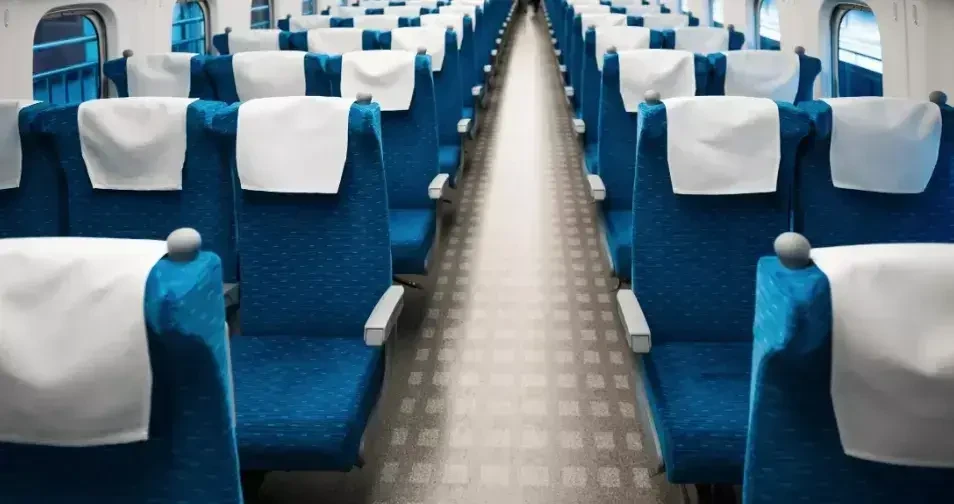
Budget-conscious travelers
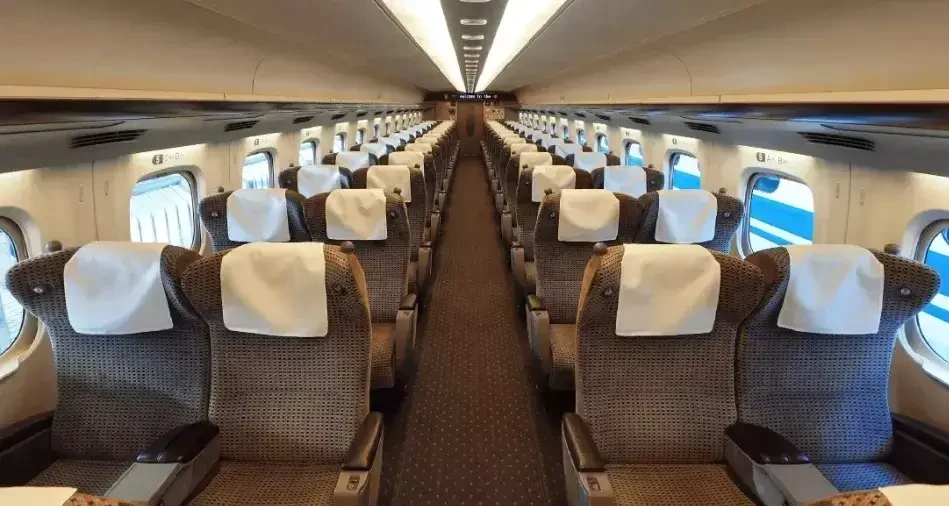
Comfort seekers and travelers
Images are illustrative. Seat layout, power outlets, luggage space, and other facilities can vary by train.
Search Osaka to Tokyo trainsThe fastest Nozomi services usually take about 2 hours 21 minutes to 2 hours 30 minutes from Shin-Osaka to Tokyo. Hikari and Kodama take longer because they stop more often.
Tokyo-bound Shinkansen trains leave from Shin-Osaka Station. Osaka Station, Umeda and Namba require a local JR or Osaka Metro connection to Shin-Osaka.
Yes. Most direct services stop at Shinagawa before Tokyo Station. Shinagawa can be more convenient for southern Tokyo and Haneda Airport connections.
The total varies by train, seat class, reservation type, travel date and seasonal pricing. Search your exact date to compare the current live total before booking.
Nozomi is faster and usually offers more departures. Hikari takes longer but may suit some rail-pass itineraries or travelers who prefer its stopping pattern.
Toward Tokyo, Mount Fuji is generally on the left side, usually the E-seat side in an ordinary car. Weather and seat availability mean the view cannot be guaranteed.
A reservation is strongly recommended for peak periods, groups, a specific departure time or oversized baggage. Non-reserved seating may be available on some trains, subject to the service and date.
Yes, but baggage whose three dimensions total more than 160 cm requires an eligible reserved seat with access to the oversized-baggage area.