Shinkansen Seat Classes: Ordinary, Green Car & GranClass
Choose the cabin class and the reservation type separately. Ordinary Car is the standard Shinkansen cabin. Green Car offers more personal space on trains that provide it. GranClass is limited to selected northern and eastern services. Reserved and non-reserved describe seat assignment, rather than two different comfort classes.
For Tokyo–Kyoto or Tokyo–Shin-Osaka, Ordinary and Green Car are the usual comparison. GranClass does not operate on that corridor. A separate Supreme Class service began on selected Tokaido/Sanyo trains on 1 October 2026; its existence does not mean every train or booking channel offers it.
Seat classes at a glance
| Option | Typical arrangement | What to check |
|---|---|---|
| Ordinary Car | 3+2 on 16-car Tokaido trains; other layouts exist | Reserved or non-reserved, group positions and luggage needs |
| Green Car | Commonly 2+2 on Tokaido trains | Availability and facilities on the actual train |
| GranClass | 2+1 on applicable train sets | Route, train and whether refreshments/attendant service are included |
| Supreme Class | Private cabins on selected Tokaido/Sanyo services | Eligible train and official booking conditions |
Ordinary Car: the standard choice
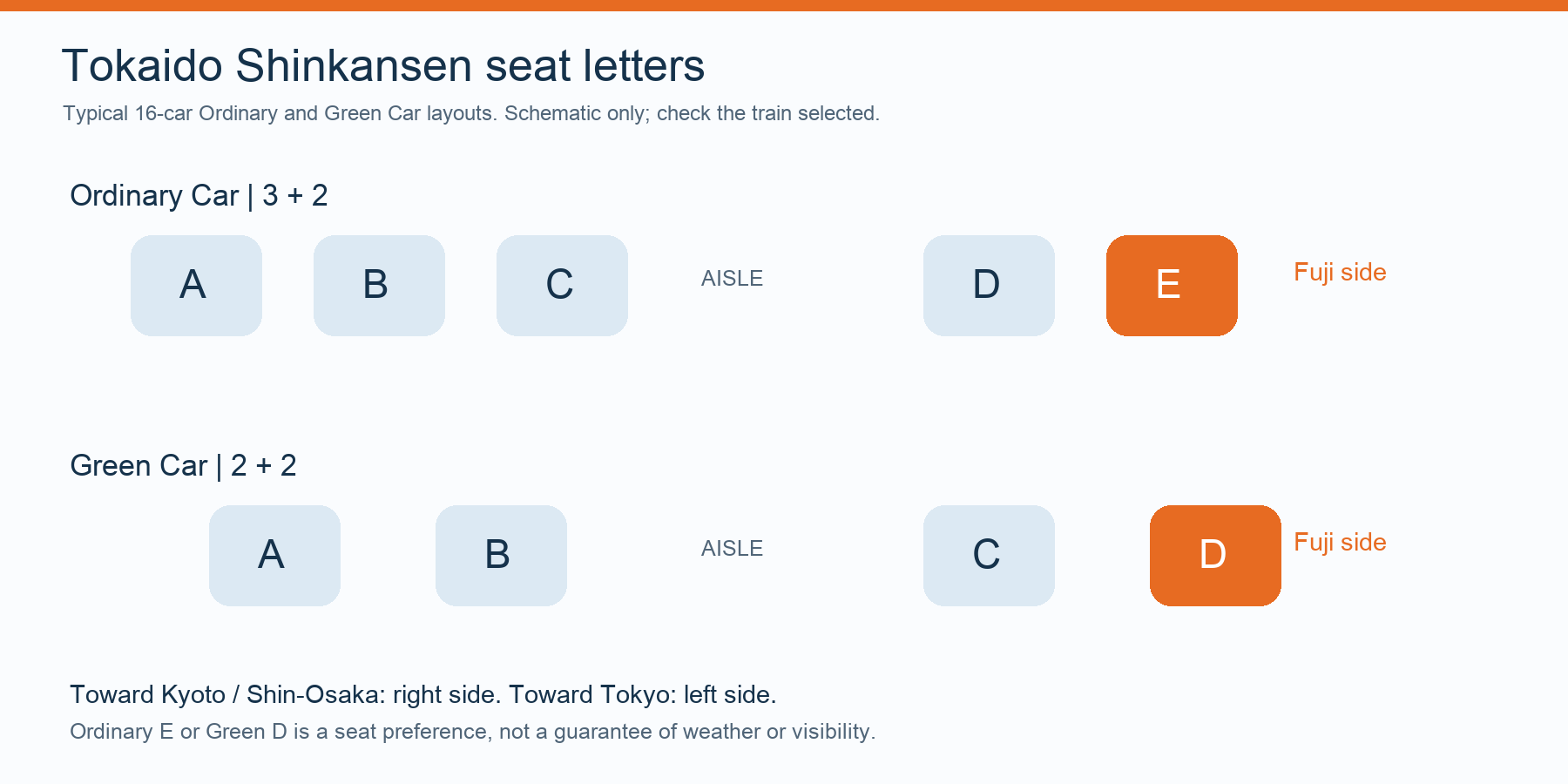
Ordinary seats provide a practical option for intercity trips. On the 16-car N700-family trains commonly used on the Tokaido line, there are three seats on one side and two on the other. Couples may prefer the two-seat side, while a group of three may find one block useful, subject to the seats actually available.
Do not identify the class from the number of seats alone. Some eight-car N700 trains on the Sanyo/Kyushu network have 2+2 ordinary reserved seating. Seat pitch, power outlets and other facilities vary by train set. Check the seat map and operator's train equipment guide, rather than assuming every Shinkansen has identical seats.
Reserved versus non-reserved
An issued reserved-seat ticket assigns a particular train, car and seat. A request for adjacent or window seats is not the same as a confirmed assignment: check the issued details before travel. A non-reserved ticket permits use of the designated non-reserved cars under that ticket's conditions. Seats are first-come, first-served, so sitting together or finding any seat is not assured.
Not every service has non-reserved cars. Nozomi normally uses cars 1 and 2 for non-reserved seating, but operates with all seats reserved during specified peak periods on the Tokaido and Sanyo lines. In 2026 those periods also include Silver Week and designated three-day weekends. Consult JR Central's current Nozomi calendar.
Green Car: more room
Green Car is a premium cabin, often described as first class. Tokaido Green Cars generally have a 2+2 layout, with no middle seat and more personal space than Ordinary. Seat design and facilities depend on the train series. A quieter experience may be desirable, but silence, empty neighboring seats and particular amenities are not guaranteed.
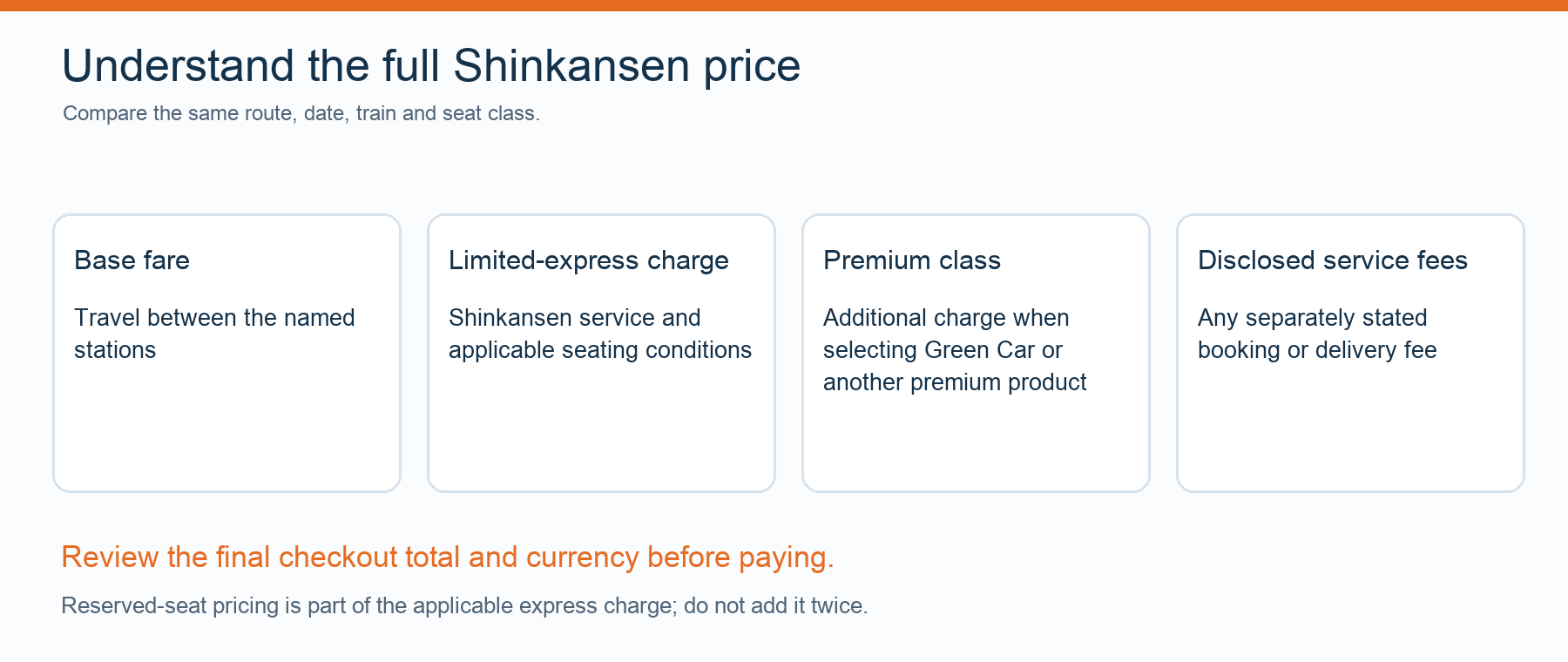
Compare the complete fare for your journey. The upgrade amount is not a universal fixed surcharge. Meals and complimentary drinks should not be assumed to come with a Green Car ticket; check the specific service before relying on onboard catering.
GranClass: check the route and service level
GranClass is available on applicable E5/H5 Tohoku/Hokkaido and E7/W7 Hokuriku or E7 Joetsu services. Its spacious seats recline, but they are not lie-flat beds: JR East specifies a maximum recline of 45 degrees. It is not an option on Nozomi, Hikari or Kodama between Tokyo, Kyoto and Shin-Osaka.
Some trains provide GranClass refreshments and an attendant; those labeled “No Beverage or Light Meal Service” offer seating without those services. Read JR East's GranClass guide and seat specifications for the train you intend to use.
What changed with Supreme Class in October 2026?
JR Central introduced Supreme Class on selected Tokaido/Sanyo services on 1 October 2026. It is a separate private-cabin product, not a new name for GranClass. The official service includes cabins in cars 7 and 10 on applicable trains. Consult JR Central's Supreme Class information for eligibility and booking. On ShinkansenTickets, rely only on the options actually shown in your search and confirmation.
Families, luggage and the final booking check
Children aged 6–11 generally use child fares. A child under six who occupies a separate reserved seat needs the appropriate child ticket. Green Car charges themselves are not halved for children, although applicable base and limited-express child fares are discounted. Check the official child-ticket rules.
Seat class does not remove luggage requirements. On Tokaido, Sanyo, Kyushu and Nishi Kyushu services, ordinary suitcases measuring over 160 cm and up to 250 cm in total dimensions require a seat with an oversized baggage area. The area is shared among the relevant seat holders. Green Car alone does not reserve it; see official luggage rules.
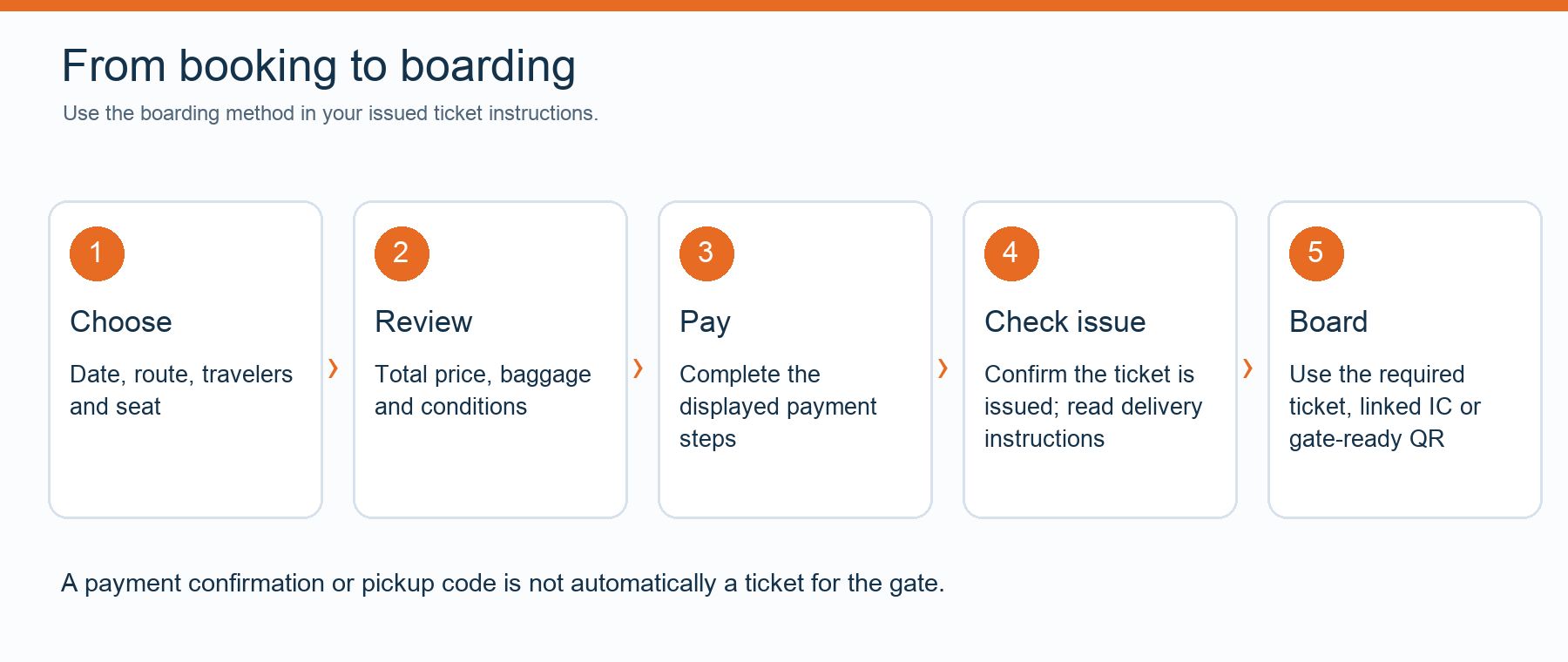
Before paying, check the route, actual train, cabin, reservation type, child tickets, luggage option and complete price. The fare breakdown and boarding guide explain the next steps. Choose from the seating available for your date, and use your issued ticket as the final record of the seat assigned.