Mount Fuji Shinkansen Seats: E or D, Direction & Viewing Tips
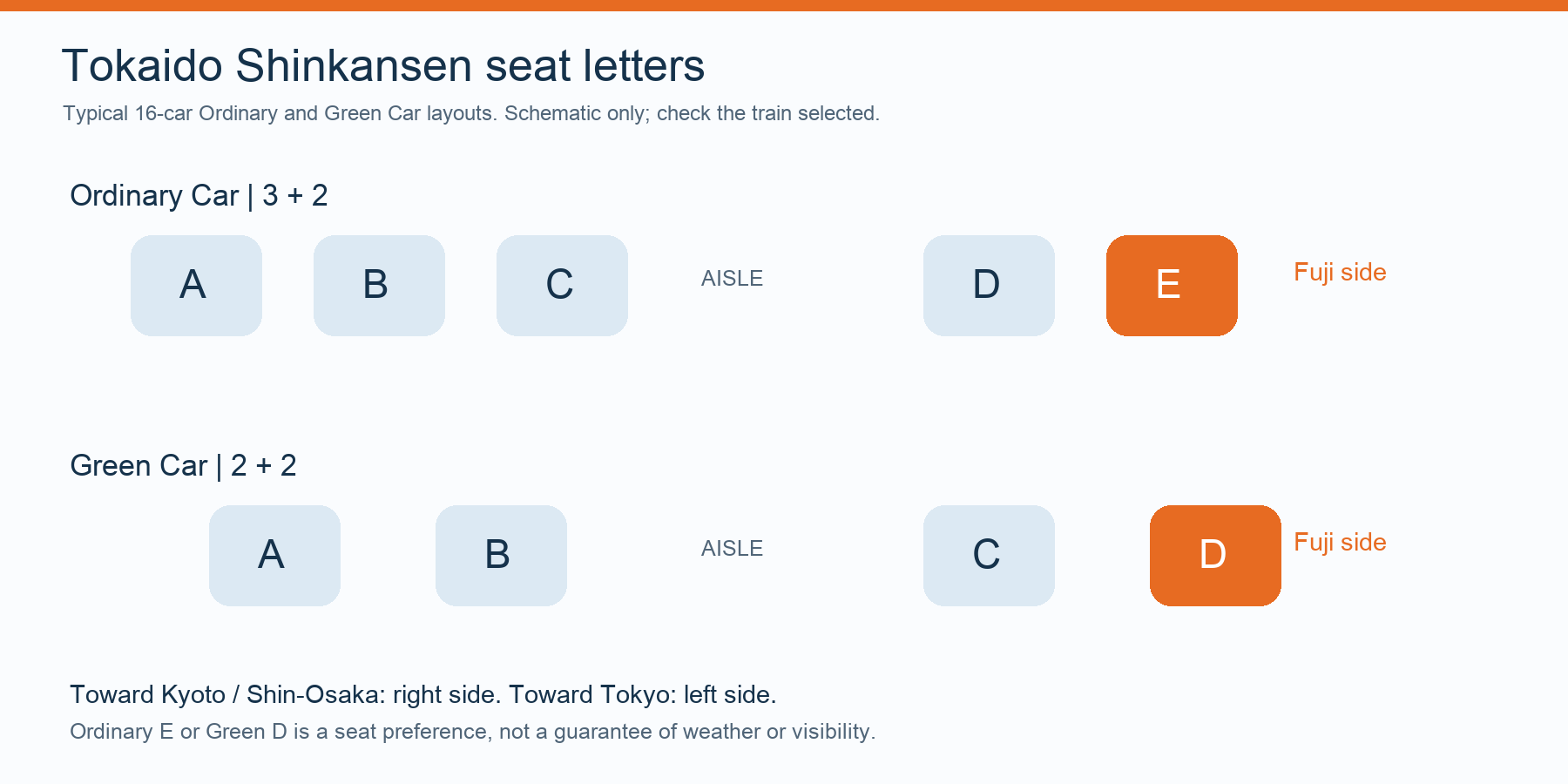
For a Mount Fuji view on a typical Tokaido Shinkansen, request window Seat E in Ordinary Car or Seat D in Green Car. The mountain is on the right when traveling from Tokyo toward Kyoto or Shin-Osaka, and on the left when traveling toward Tokyo. The seat letters stay the same when the train changes direction. A seat request is subject to availability, and no seat guarantees that the mountain will be visible.
Which Shinkansen seats face Mount Fuji?
The familiar 16-car Tokaido trains have a 3+2 layout in Ordinary Car: A, B and C form the three-seat side; D and E form the two-seat side. E is the mountain-side window. D in Ordinary Car is the aisle seat beside E, so asking only for “Seat D” can produce a different result from the one you intended.
| Cabin | Mountain-side window | Tokyo toward Kyoto | Kyoto toward Tokyo |
|---|---|---|---|
| Ordinary Car | E | Right | Left |
| Green Car | D | Right | Left |
Green Car usually uses a 2+2 layout. Choose it for the cabin space and seating arrangement rather than expecting better weather, glare-free glass or a guaranteed photograph. The seat classes guide explains how cabin class differs from reserved and non-reserved seating.
When should you look for the mountain?
The useful viewing section is in Shizuoka Prefecture, around Shin-Fuji. Check your progress through this part of the journey and have your camera ready before reaching it. Do not depend on an exact number of minutes after Tokyo: Nozomi, Hikari and Kodama have different stops, and delays or a departure from Shinagawa change the timing.
When heading east from Kyoto, Osaka or Hiroshima, the same viewing area comes before the final approach to Tokyo. A route map or the onboard information display can help you recognize the section. There is no need to stand at a door or block an aisle while waiting.
Weather matters more than the ticket class
Cloud, haze, rain and darkness can hide Mount Fuji. Buildings and other trackside structures also interrupt the view. Even a clear forecast does not promise a completely unobstructed view at the moment your train passes. Treat the mountain as a possible highlight of the journey rather than a service included in the ticket.
If seeing Fuji is the main purpose of the day, consider a separate visit with a flexible sightseeing plan. Our Tokyo to Mount Fuji transport guide explains the difference between Kawaguchiko, Hakone and the southern approaches. A view from the Tokaido train is different from traveling to the lakes or mountain itself.
How to request the correct window seat
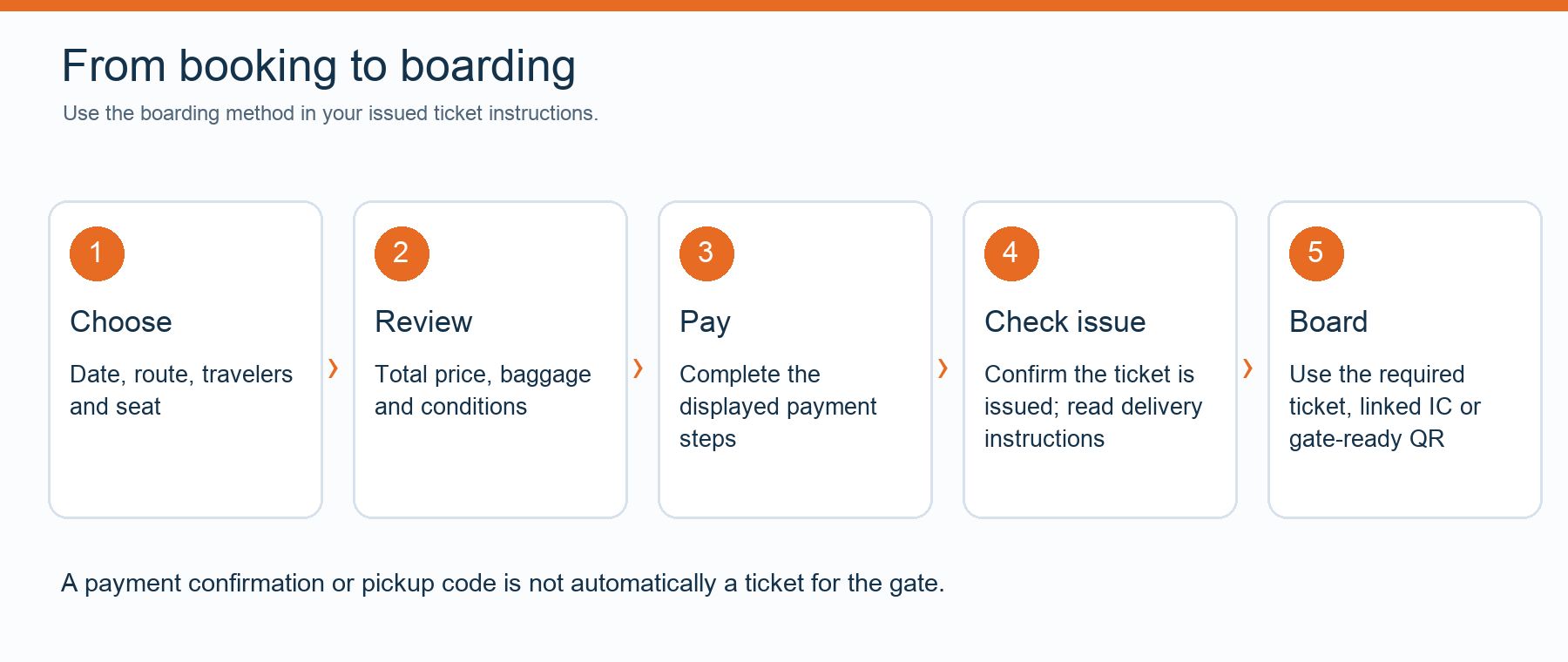
Choose your travel direction using the Tokyo to Kyoto, Tokyo to Osaka or Osaka to Tokyo route guide. Then check available departures and the seat options offered for your travel date.
- Search the exact boarding station, destination and travel date.
- Choose your train and cabin class.
- Use the offered seat map or seat-preference option to request the relevant window.
- Check whether the result is a preference or a confirmed assignment.
- Read the issued car and seat number before travel.
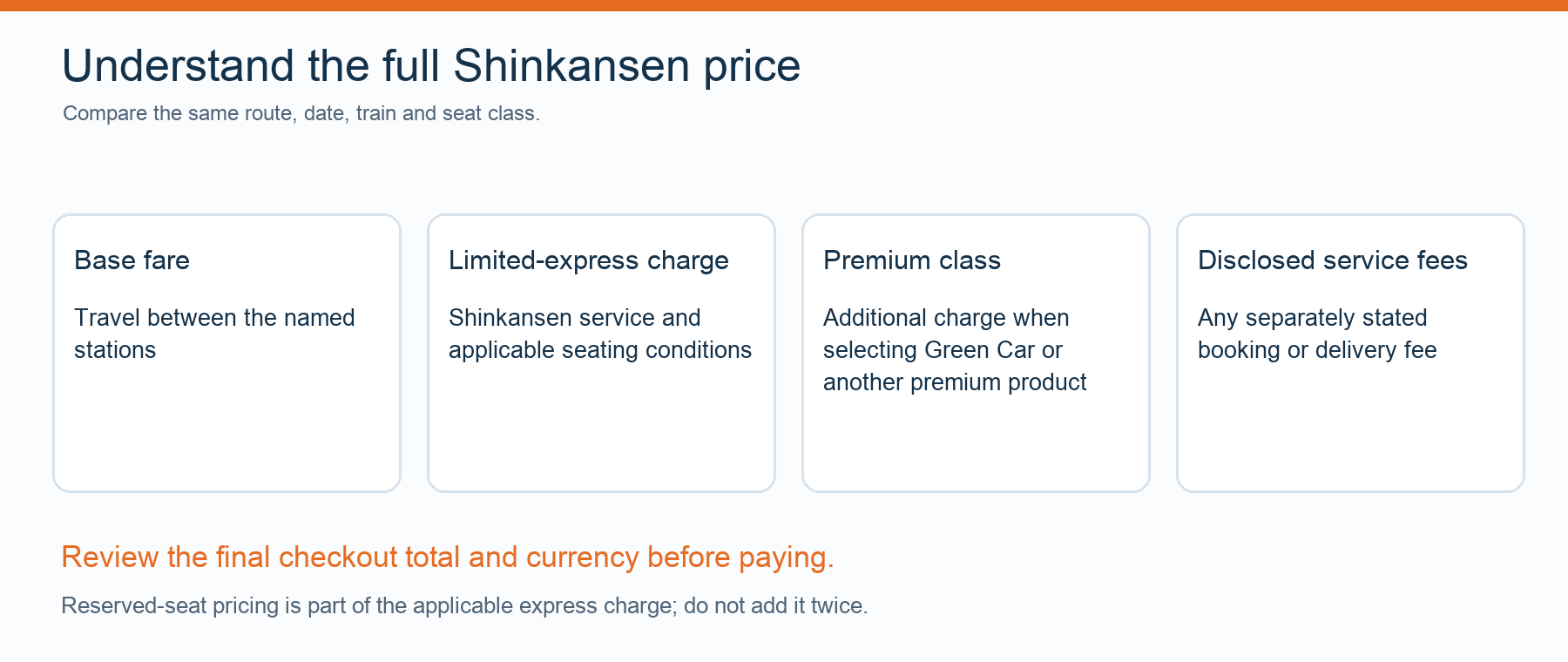
If the desired window is unavailable, compare another departure or decide whether your schedule matters more than the view. Paying for a booking or entering a preference does not by itself confirm a particular seat. Adjacent seats for companions must also be checked in the issued reservation.
Large suitcases can affect the choice
On the Tokaido Shinkansen, ordinary suitcases over 160 cm and up to 250 cm in combined height, width and depth need the appropriate oversized-baggage seat arrangement. Selecting a rear-row E seat on an ordinary seat map is not a substitute for confirming that arrangement. Weight, number-of-pieces and longest-side limits also apply.
Both the window and the baggage arrangement need to be available for your chosen train. If they cannot be combined, consider a different departure or luggage delivery. Follow the storage location attached to the reservation, and keep valuables with you.
Taking a photograph respectfully
Prepare the camera before the viewing section, turn off the flash and try a short burst if your device supports it. Reflections and motion can affect the result. Stay within your own seat space and avoid leaning across another passenger. If the mountain is hidden, enjoy the ride without moving around the car to seek a promised view that the weather cannot provide.
Use the online booking checklist to confirm your ticket, seat request and delivery method before payment.
Official sources and travel-date checks
Reviewed on 11 October 2026. Timetables, available seats and booking conditions can change. Check the operator guidance and the instructions issued with your ticket before travel.
Trova i treni per il tuo viaggio
Apri una tratta e scegli la data del viaggio per verificare partenze e posti disponibili. Conferma la stazione di partenza prima di prenotare.