Shinkansen Ticket Prices: Fares & Seat Fees (2026)
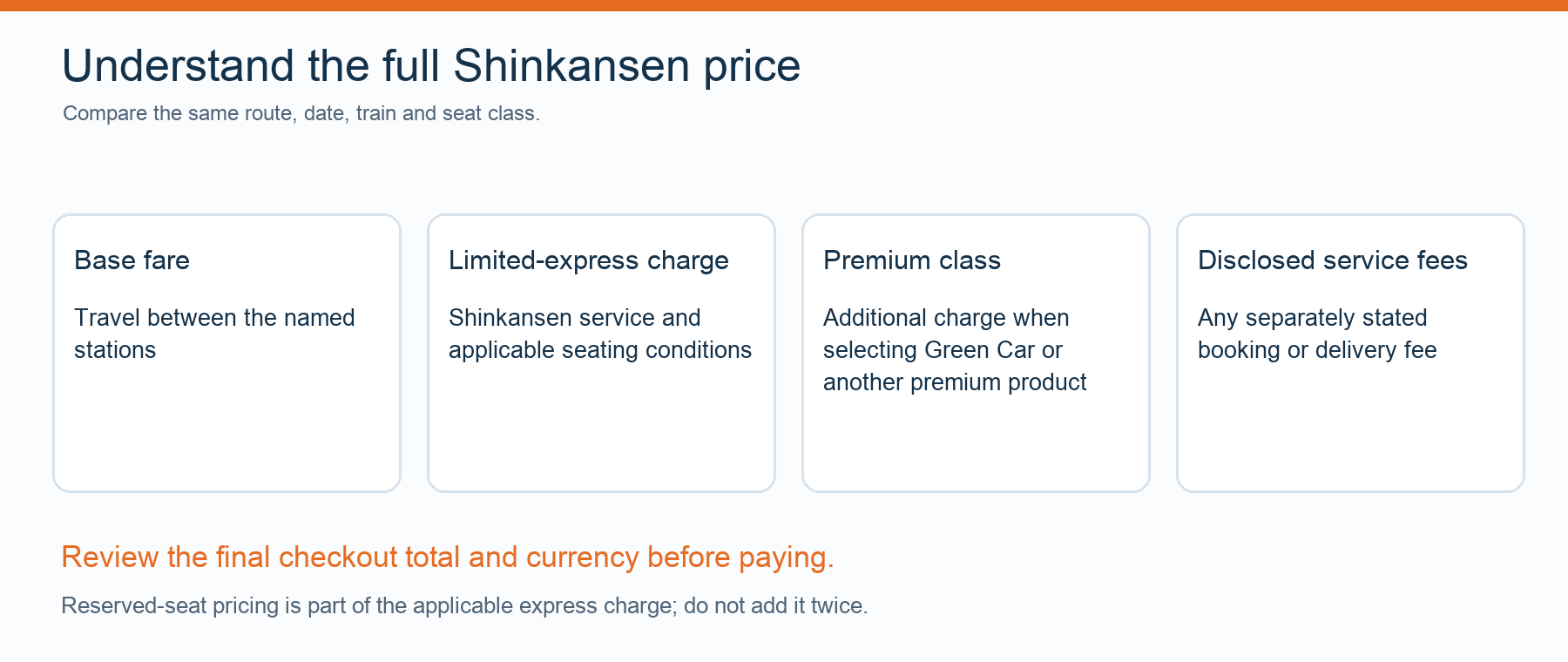
How much does a Shinkansen ticket cost? The answer depends on the route, train, seat and travel date. A complete ticket price normally combines a distance-based base fare with a Shinkansen limited-express charge; reserved seating, Green Car and any separately disclosed booking fee can change the final total.
Shinkansen ticket price at a glance
| Price component | What it covers | What can change it |
|---|---|---|
| Base fare | Rail travel between the origin and destination | Distance, route and ticket validity |
| Shinkansen limited-express charge | Use of the high-speed Shinkansen service | Section, train and seating choice |
| Reservation/date adjustment within the limited-express charge | A specific seat on a specified train | Train, date and railway calendar period; do not add it twice |
| Green Car premium | Travel in the premium cabin | Route and distance |
| Booking service fee, if shown | Reservation, support, payment or delivery service | Booking channel and selected service |
These rows explain how the price is built; a reserved-seat adjustment may already be included in the quoted limited-express charge. Do not add it a second time. There is no single nationwide Shinkansen price. Use the breakdown below to understand the total, then search your exact route and date for a current quote.
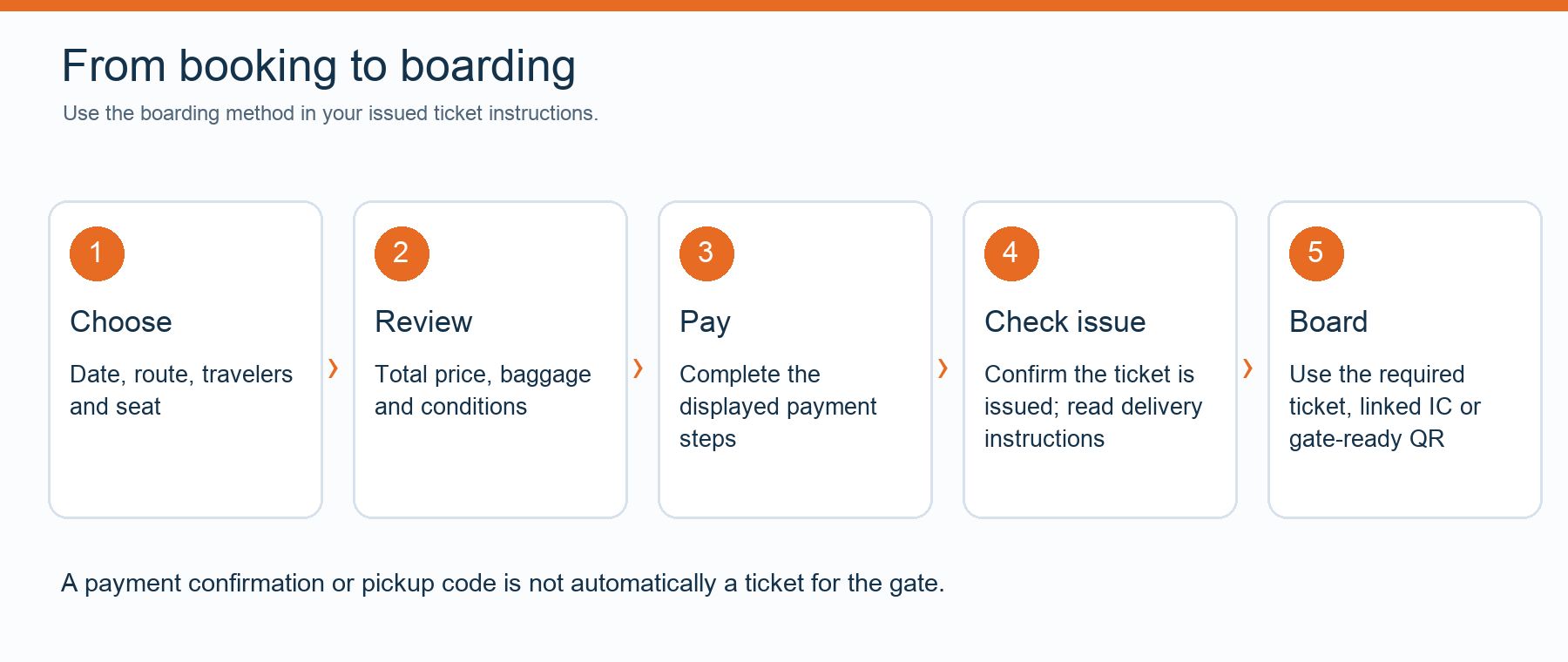
The exact ticket format varies. A purchase may produce separate basic-fare and limited-express tickets, a combined ticket, an IC-linked reservation or another collection method. Follow the instructions for the specific product instead of assuming every booking uses one paper ticket or one QR code.
What is the basic fare?
The basic fare covers ordinary rail travel between the named origin and destination and is largely related to distance. It is the foundation of the journey price whether the traveler uses a local train, conventional limited express or Shinkansen for part of the trip. A Shinkansen passenger still needs the separate limited-express entitlement.
Long-distance basic-fare tickets can have validity and stopover rules, but those rules depend on the route, ticket type and travel pattern. Through-city zones and IC-card areas add further detail. Do not build a complicated stopover itinerary from a generic example; confirm it with the railway or ticket issuer.
What is the Shinkansen limited-express charge?
This charge permits travel on the high-speed Shinkansen service. Its amount depends on the section, train category and seating choice. On the Tokaido route, Nozomi, Hikari and Kodama serve different stopping patterns. Faster service does not mean every route has the same surcharge relationship, so compare the actual train shown in search results.
A complete booking should include all required railway components for the selected itinerary. Before payment, confirm the origin, destination, train, seat and whether the displayed total includes any service fee.
Reserved, non-reserved and Green Car pricing
A reserved-seat ticket assigns a particular seat on a specified train. A non-reserved option, when offered, usually costs less but does not guarantee a seat and is not available on every train or during every operating period. Some services can operate with all seats reserved.
Green Car adds a premium for a more spacious cabin; facilities depend on the train. GranClass is a separate premium product on selected northern routes and should not be assumed available on Tokaido services. Supreme Class is a separate private-cabin service introduced on selected Tokaido/Sanyo trains on 1 October 2026. Availability through a booking channel depends on the options actually offered. Amenities vary by train set.
Why prices vary by date
Reserved-seat charges can vary by the railway calendar and demand period. Holiday operations can also change which trains offer non-reserved cars. Nozomi has all-reserved seating during specified peak periods; the 2026 calendar includes Silver Week and designated three-day weekends as well as Golden Week, Obon and New Year. Check the current dates and availability.
Currency conversions also move continuously. Check the currency and final amount shown at checkout rather than relying on a fixed dollar conversion from an article. ShinkansenTickets adds no payment processing fee to train bookings under the policy effective from 17 September 2026 at 16:28 (UTC+08:00). Your bank or wallet may separately charge for conversion or cross-border transactions.
Route examples are planning guides, not quotes
Tokyo–Kyoto and Tokyo–Shin-Osaka are useful examples because both include the basic fare and the Shinkansen limited-express component. The total changes with the seat, train and calendar. Use the Tokyo to Kyoto route guide or Tokyo to Osaka route guide to understand time and station choices, then search the exact date for the current price.
Children and infants
JR child fares generally apply to ages 6–11: the basic fare and applicable limited-express charge are half the adult amount, with railway rounding. Infants and children under six are generally free without their own reserved seat, subject to the allowance of up to two young children per accompanying adult or fare-paying child and the railway exceptions. A separate reserved seat requires the appropriate child ticket.
Enter each passenger accurately in the booking flow. The Green Car charge itself is the same for adults and children, so the complete child Green Car ticket is not simply half of the adult total.
Oversized baggage and fares
On Tokaido, Sanyo, Kyushu and Nishi Kyushu services, ordinary suitcases with total dimensions over 160 cm and up to 250 cm require a seat with an oversized baggage area. Reserving this area does not add a separate JR luggage charge to the appropriate reserved-seat fare. Bringing qualifying luggage without the reservation incurs a ¥1,000 railway fee and staff instructions; paying it is not a recommended substitute for booking correctly. Exactly 160 cm is below the oversized threshold, and ordinary luggage over 250 cm is not allowed. The deck-storage trial does not remove this requirement.
IC cards and digital reservations
An IC card such as Suica or ICOCA does not by itself give permission to ride the Shinkansen. Some official digital products let travelers link a valid Shinkansen reservation to a registered IC card. Regional IC rules and cross-area travel can be complex, so use the instructions attached to the reservation.
How to compare the real total
- Search the exact origin, destination and date.
- Compare train names and journey times.
- Choose the seat class and reservation type.
- Check baggage requirements.
- Review the basic fare, limited-express entitlement and any separately disclosed service fee.
- Read change, cancellation and delivery conditions before payment.
Paper tickets, IC-linked travel and gate use
If a journey uses two paper tickets, the gate instructions may require both to be inserted together. A combined ticket can represent the same required railway components. For an IC-linked reservation, the card must be registered to the correct passenger and booking before travel. Never assume that tapping an unlinked transit card will charge the complete Shinkansen fare automatically.
Keep the issued tickets and boarding credentials until the journey is complete; a payment receipt is not itself a boarding ticket. At a staffed gate, show the full set if the machine rejects it. Splitting the journey, changing the route or leaving an intermediate station can affect validity, so ask before exiting when the conditions are unclear.
Railway fares and service fees
The basic fare, limited-express charge and seat premiums are railway components. A booking platform may charge a separate fee for reservation, support, payment handling or delivery. Compare the complete checkout total and the support provided, not only one rail component shown in isolation.
Final review before payment
Read the itinerary from top to bottom: passenger count, stations, date, train, seat, luggage option, delivery method, currency and total. Save the confirmation and support contact details. This final check prevents more problems than relying on a headline price or a remembered departure time.
Related planning guides
Search your route and date to see the current total.
Official fare and travel rules
References: ticket components, child fares, luggage, Nozomi peak dates and Supreme Class. Railway rules and a seller’s service fees are separate matters.