
คู่มือรถไฟญี่ปุ่น: ชินคันเซ็น รถไฟท้องถิ่น และรถไฟใต้ดิน
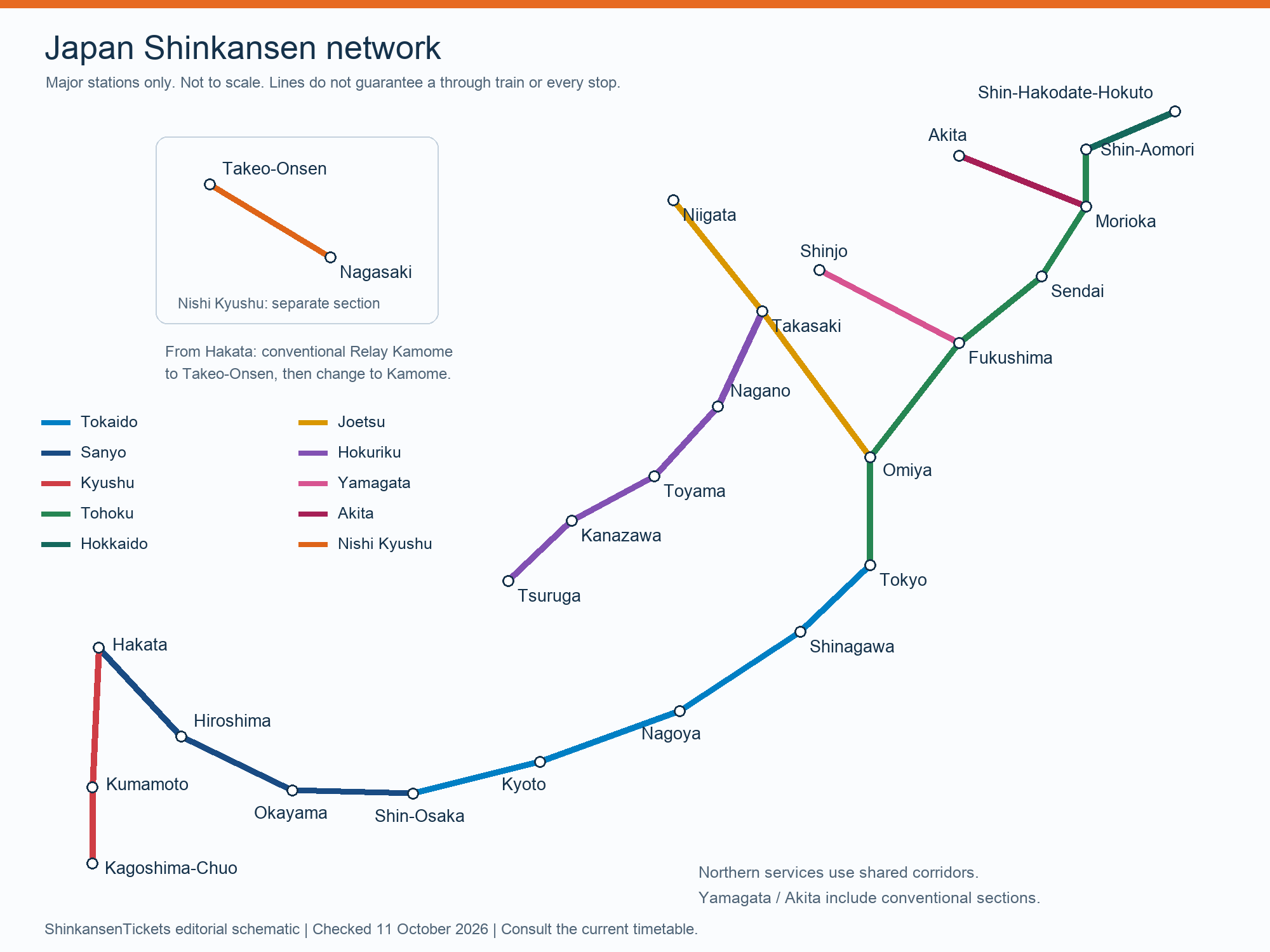
เครือข่ายรถไฟญี่ปุ่นมีชินคันเซ็น รถด่วนพิเศษ รถธรรมดาและรถเร็ว รถไฟใต้ดิน และรถไฟเอกชน เลือกบริการตามระยะทาง เส้นทาง ความต้องการที่นั่ง และค่าโดยสารรวม
ประเภทรถไฟหลักในญี่ปุ่น
รถไฟความเร็วสูงชินคันเซ็น
ชินคันเซ็นเชื่อมเมืองใหญ่ผ่านรางความเร็วสูงเฉพาะ โดยทั่วไปเป็นทางเลือกที่สะดวกสำหรับโตเกียวไปเกียวโต โตเกียวไป Shin-Osaka หรือ Shin-Osaka ไปฮิโรชิมะ ชื่อบริการ สถานีจอด และกฎที่นั่งแตกต่างกันตามสาย จึงต้องตรวจชื่อขบวนและปลายทางก่อนขึ้น
ใช้ แผนที่และคู่มือเส้นทางชินคันเซ็นญี่ปุ่น เพื่อเปรียบเทียบสายหลักและสถานี เมื่อพร้อมเดินทาง ให้ ค้นหาเส้นทางชินคันเซ็นและตัวเลือกตั๋วที่มีให้.
รถด่วนพิเศษ
รถด่วนพิเศษเชื่อมสนามบิน เมืองภูมิภาค และจุดหมายที่ชินคันเซ็นไม่ได้ให้บริการโดยตรง จอดน้อยกว่ารถธรรมดาหรือรถเร็ว และอาจต้องมีทั้งค่าโดยสารพื้นฐานและค่ารถด่วนพิเศษ บางบริการต้องจองทุกที่นั่ง ขณะที่บางบริการมีตู้ไม่จองที่นั่ง
รถธรรมดา รถเร็ว และรถไฟชานเมือง
รถธรรมดาจอดทุกสถานี รถเร็ว รถเร็วพิเศษ และบริการคล้ายกันข้ามบางสถานี แต่มักใช้รางและชานชาลาเดียวกัน ตรวจจอแสดงขบวนเสมอ เพราะรถที่เร็วกว่าอาจไม่จอดที่ปลายทางของคุณ
ตู้รถไฟชานเมืองมักใช้ที่นั่งยาวตามแนวตู้เพื่อเพิ่มพื้นที่ยืน โดยทั่วไปที่นั่งเป็นแบบมาก่อนได้นั่งก่อน ยกเว้นพื้นที่สำรองสำหรับผู้มีสิทธิพิเศษที่มีป้ายชัดเจน
รถไฟใต้ดินและรถไฟเอกชน
โตเกียว โอซาก้า เกียวโต และเมืองอื่นมีทั้งรถไฟใต้ดินของเมือง เครือข่าย JR และรถไฟเอกชน การเปลี่ยนผู้ให้บริการอาจต้องเดินผ่านประตูอื่นหรือจ่ายค่าโดยสารแยก หมายเลขสถานี สีสาย และโลโก้ช่วยแยกเส้นทางที่ชื่อคล้ายกัน
ทำความเข้าใจตั๋วรถไฟญี่ปุ่น
ค่าโดยสารพื้นฐานและค่ารถด่วนพิเศษ
การเดินทางท้องถิ่นมักใช้เพียงค่าโดยสารพื้นฐาน ส่วนชินคันเซ็นหรือรถด่วนพิเศษมักมีทั้งค่าโดยสารพื้นฐานและค่ารถด่วนพิเศษ อาจรวมอยู่ในตั๋วเดียวหรือแยกหลายใบ หากได้รับตั๋วกระดาษสองใบสำหรับเที่ยวเดียวกัน ให้สอดพร้อมกันเมื่อคำแนะนำที่ประตูระบุ และรับตั๋วคืนอีกด้าน
บัตร IC สำหรับเดินทางท้องถิ่น
บัตร IC เติมเงินสะดวกสำหรับรถไฟท้องถิ่น รถไฟใต้ดิน และรถบัสหลายแห่ง แตะเข้าที่ต้นทางและแตะออกที่ปลายทาง ครอบคลุมกว้างแต่ไม่ใช่ทุกแห่ง และบัตร IC เพียงใบเดียวใช้แทนตั๋วชินคันเซ็นหรือรถด่วนพิเศษแบบจองทุกประเภทไม่ได้
จองออนไลน์ รหัส QR และรับตั๋ว
การจองออนไลน์อาจให้ QR ที่ผ่านประตูได้ ตั๋วกระดาษ หรือคำแนะนำให้รับตั๋วก่อนเดินทาง ทำตามวิธีรับตั๋วที่ระบุในเอกสารยืนยัน ดู คู่มือจองตั๋วชินคันเซ็นออนไลน์ และ คู่มือรับตั๋ว ก่อนถึงสถานี
ประเภทที่นั่งชินคันเซ็น
ตัวเลือกที่นั่งขึ้นอยู่กับสายและขบวน Ordinary และ Green Car เป็นชั้นโดยสาร ส่วนจองและไม่จองหมายถึงวิธีจัดที่นั่ง ชั้นธรรมดาบนโทไคโดมักเป็นผัง 3+2 แต่ชุดรถอื่นอาจต่างกัน การจองที่ออกแล้วกำหนดขบวน ตู้ และที่นั่งเฉพาะ ความต้องการนั่งเป็นกลุ่มขึ้นอยู่กับที่ว่าง
| ประเภทที่นั่ง | สิ่งที่คาดหวัง | เหมาะสำหรับ |
|---|---|---|
| ไม่จองที่นั่ง | ที่นั่งแบบมาก่อนได้นั่งก่อนในตู้ที่กำหนด เมื่อมีให้บริการ | เดินทางยืดหยุ่นนอกช่วงคนเดินทางมาก |
| ชั้นธรรมดาแบบจอง | ระบุขบวน ตู้ และที่นั่งบนตั๋วที่ออกแล้ว | นักท่องเที่ยวส่วนใหญ่ กลุ่ม และการเดินทางช่วงหนาแน่น |
| Green Car | ชั้นพรีเมียมที่มีพื้นที่ส่วนตัวมากขึ้น สิ่งอำนวยความสะดวกต่างกันตามขบวน | เดินทางไกลและผู้ที่ให้ความสำคัญกับความสบาย |
| GranClass | ที่นั่งพรีเมียมในบางขบวน บริการบนรถแตกต่างกัน | การเดินทางพรีเมียมบนบริการทางเหนือและตะวันออกที่เข้าเกณฑ์ |
GranClass มีในบางขบวนของโทโฮคุ ฮอกไกโด โฮคุริคุ และโจเอ็ตสึ ไม่ใช่บริการโตเกียว–เกียวโต อาหารว่าง เครื่องดื่ม และบริการพนักงานเฉพาะแตกต่างกัน บางขบวน GranClass ให้เพียงที่นั่ง ส่วน Supreme Class เป็นผลิตภัณฑ์ห้องโดยสารส่วนตัวอีกประเภทหนึ่ง เริ่มบนบางบริการโทไคโด/ซันโยเมื่อ 1 ตุลาคม 2026 เว็บไซต์นี้จำหน่ายบริการรถไฟใดก็ต่อเมื่อบริการนั้นแสดงอยู่ในตัวเลือกการจองจริง
อ่านการเปรียบเทียบเพิ่มเติมใน คู่มือชั้นที่นั่งชินคันเซ็น.
หาขบวนรถของคุณ
ตรวจผู้ให้บริการ สาย ชื่อขบวน สถานีจอด และชานชาลาบนจอขาออก ทำตามวิธีขึ้นรถที่ได้รับ หาเครื่องหมายตู้โดยสาร และให้ผู้โดยสารลงก่อนขึ้น อ่าน คู่มือขึ้นรถ สำหรับขั้นตอนทั้งหมด
สัมภาระ การเข้าถึง และมารยาทบนรถไฟ
สัมภาระ
วางกระเป๋าเล็กบนชั้นเหนือศีรษะหรือด้านหน้าโดยไม่ขวางทางเดิน บนชินคันเซ็นโทไคโด ซันโย คิวชู และนิชิคิวชู กระเป๋าเดินทางทั่วไปที่มีผลรวมสามด้านมากกว่า 160 cm แต่ไม่เกิน 250 cm ต้องจองที่นั่งพร้อมพื้นที่สัมภาระขนาดใหญ่พิเศษ กระเป๋าที่ขนาดเท่ากับ 160 cm พอดีไม่เกินเกณฑ์ สัมภาระทั่วไปเกิน 250 cm นำขึ้นรถไม่ได้ ข้อจำกัดทั่วไปคือผู้โดยสารหนึ่งคนมีได้สองชิ้น แต่ละชิ้นหนักไม่เกิน 30 kg และยาวไม่เกิน 2 m ไม่นับของใช้ส่วนตัวชิ้นเล็ก การทดลองพื้นที่เก็บของในโถงหน้าประตูบนรถแบบไม่ต้องจองในบางขบวนโทไคโด/ซันโยไม่ได้ยกเลิกกฎจองพื้นที่สำหรับกระเป๋าขนาดใหญ่พิเศษ
การเข้าถึง
สถานีใหญ่มักมีลิฟต์ ห้องน้ำที่เข้าถึงได้ และความช่วยเหลือจากเจ้าหน้าที่ แต่เส้นทางเปลี่ยนรถอาจไกล ผู้ที่ต้องการความช่วยเหลือขึ้นรถควรเผื่อเวลาและติดต่อผู้ให้บริการล่วงหน้าเมื่อทำได้
มารยาท
เข้าแถวหลังเครื่องหมายบนชานชาลา ให้ผู้โดยสารลงก่อน ลดเสียง และไม่กีดขวางประตู ทางเดิน หรือพื้นที่สัมภาระ ใช้ถังขยะที่กำหนดหรือนำขยะกลับไปด้วย
วางแผนเดินทางด้วยรถไฟญี่ปุ่น
Nozomi ต้องจองทุกที่นั่งในช่วงหนาแน่นที่กำหนด รวมวันหยุดยาวเพิ่มเติมในปี 2026 JAPAN RAIL PASS ทั่วประเทศเพียงอย่างเดียวไม่ครอบคลุม Nozomi หรือ Mizuho ต้องซื้อ NOZOMI MIZUHO Ticket ที่เหมาะสมแยกด้วย พาสภูมิภาคมีเงื่อนไขแตกต่างกัน
แหล่งอ้างอิงทางการ: กฎสัมภาระ JR Central, วันเดินทางหนาแน่นของ Nozomi, ตั๋วพิเศษ JAPAN RAIL PASS, GranClass และ Supreme Class.
พร้อมวางแผนการเดินทางแล้วหรือยัง ค้นหาเส้นทางชินคันเซ็นและตัวเลือกตั๋ว สำหรับวันเดินทางของคุณ