Fukuoka to Tokyo Shinkansen: 2026 Times, Prices & Tips

Key Takeaway: The direct Fukuoka to Tokyo Shinkansen Nozomi service covers the 1,069-kilometer journey in exactly 4 hours and 56 minutes, with reserved seats costing ¥23,390 in 2026. Skip the slower multi-transfer routes and secure your Nozomi seat early. Book your train tickets online to guarantee oversized luggage space and a Mount Fuji window view before they sell out.
After finishing a steaming bowl of rich tonkotsu ramen in Kyushu, you can step onto a sleek train and arrive in Japan's capital before dinner. Planning the Fukuoka to Tokyo Shinkansen 2026 journey is about balancing raw speed with long-haul comfort. But it is a surprisingly long ride. At nearly five hours, this cross-country route pushes the absolute limit of where high-speed rail competes with domestic flights. Let's break down exactly how to make this massive Fukuoka to Tokyo Shinkansen transit day work for your itinerary.
Quick Overview: The Fukuoka to Tokyo Shinkansen Route at a Glance

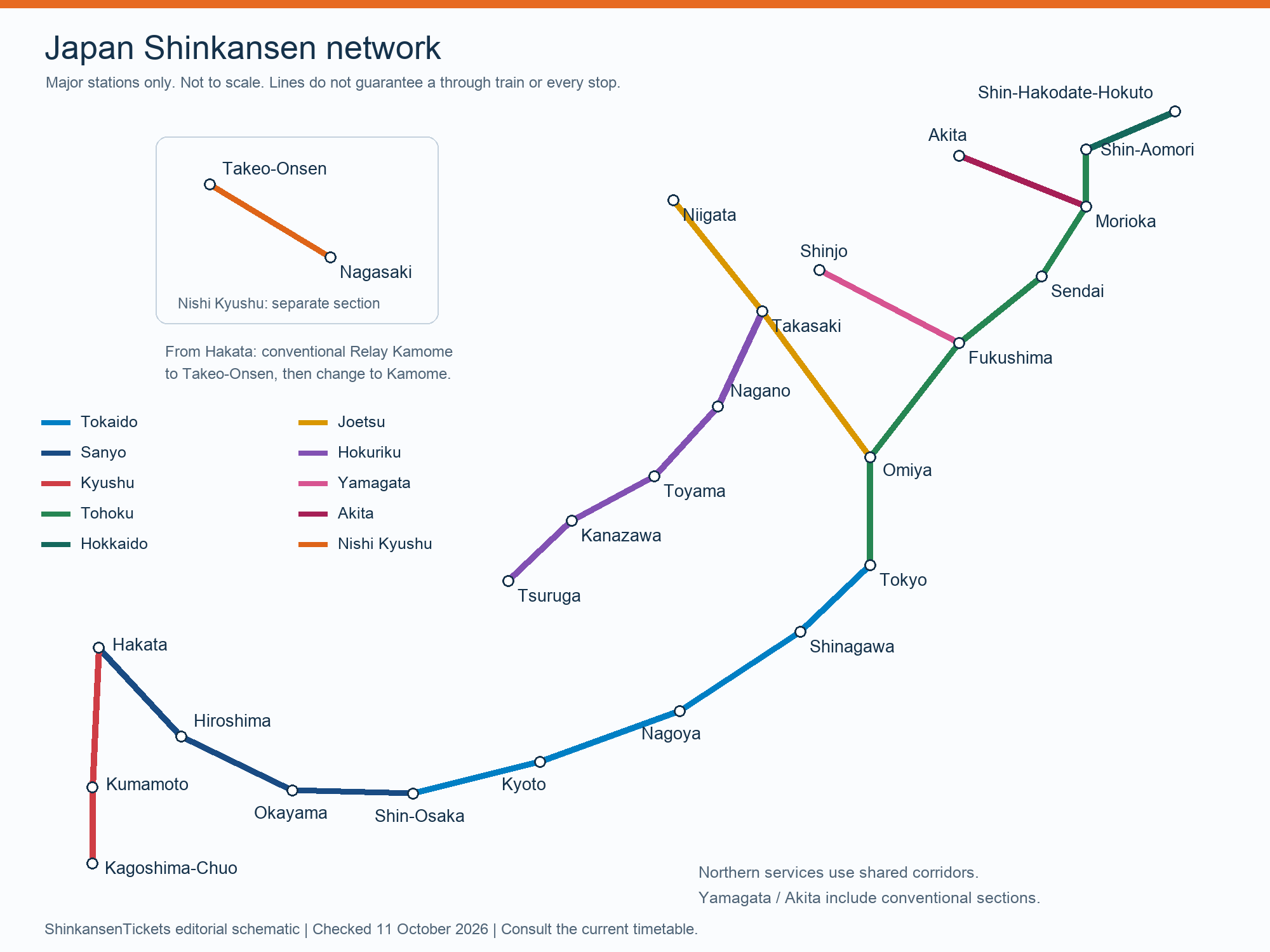
Before we look at the granular details, you need the basic logistics. Fukuoka's high-speed rail terminal is actually called Hakata Station, not Fukuoka Station. Keep this in mind when searching for fares and reading station maps.
- Departure Station: Hakata Station (Fukuoka)
- Arrival Station: Tokyo Station or Shinagawa Station
- Total Distance: 1,069 kilometers (664 miles)
- Fastest Travel Time: 4 hours 56 minutes via the Nozomi train
- Departure Frequency: Direct Fukuoka to Tokyo Shinkansen trains leave 2 to 3 times per hour
- First/Last Train: The first departure is usually around 6:00 AM, with the final direct train leaving just before 7:00 PM.
If you plan to connect to other parts of the city upon arrival, reading a Tokyo Shinkansen Stations Guide 2026: Save 15 Minutes can drastically cut down your underground transit time.
Fukuoka to Tokyo Shinkansen 2026: Time, Price and Best Route

You have a few distinct options when crossing the country. But only one makes practical sense. The Tokaido-Sanyo Shinkansen line connects these two cities, and the specific train type you choose dictates your travel time.
The Nozomi is the flagship service. It skips minor stations entirely. You board in Hakata, stop at major hubs like Hiroshima, Shin-Osaka, Nagoya, and Kyoto, and roll straight into Tokyo. The direct Nozomi Shinkansen is the undisputed champion of the Fukuoka to Tokyo Shinkansen route, completing the 1,069 km trip in just 4 hours and 56 minutes.
Alternatively, you could take a Sakura train to Shin-Osaka and transfer to a Hikari train. Do not do this unless you are strictly bound by an older Japan Rail Pass. It adds an hour to your travel time and introduces the stress of hauling luggage between platforms. Your time in Japan is highly valuable. Stick to the direct Fukuoka to Tokyo Shinkansen route.
| Train Type | Transfers | Average Travel Time | Action |
|---|---|---|---|
| Nozomi (Fastest) | 0 (Direct) | 4h 56m | Book Nozomi |
| Sakura + Hikari | 1 (at Shin-Osaka) | 5h 45m - 6h 10m | Compare Routes |
| Kodama | Multiple | 9h+ (Not Recommended) | N/A |
For a deeper look into the specific schedules, you can review the full Fukuoka to Tokyo Shinkansen: Tickets, Fares & Timetables. When you are ready to lock in your schedule, check latest prices on shinkansentickets.net to secure your preferred departure time.
Breaking Down the Fares: Ordinary vs. Green Car

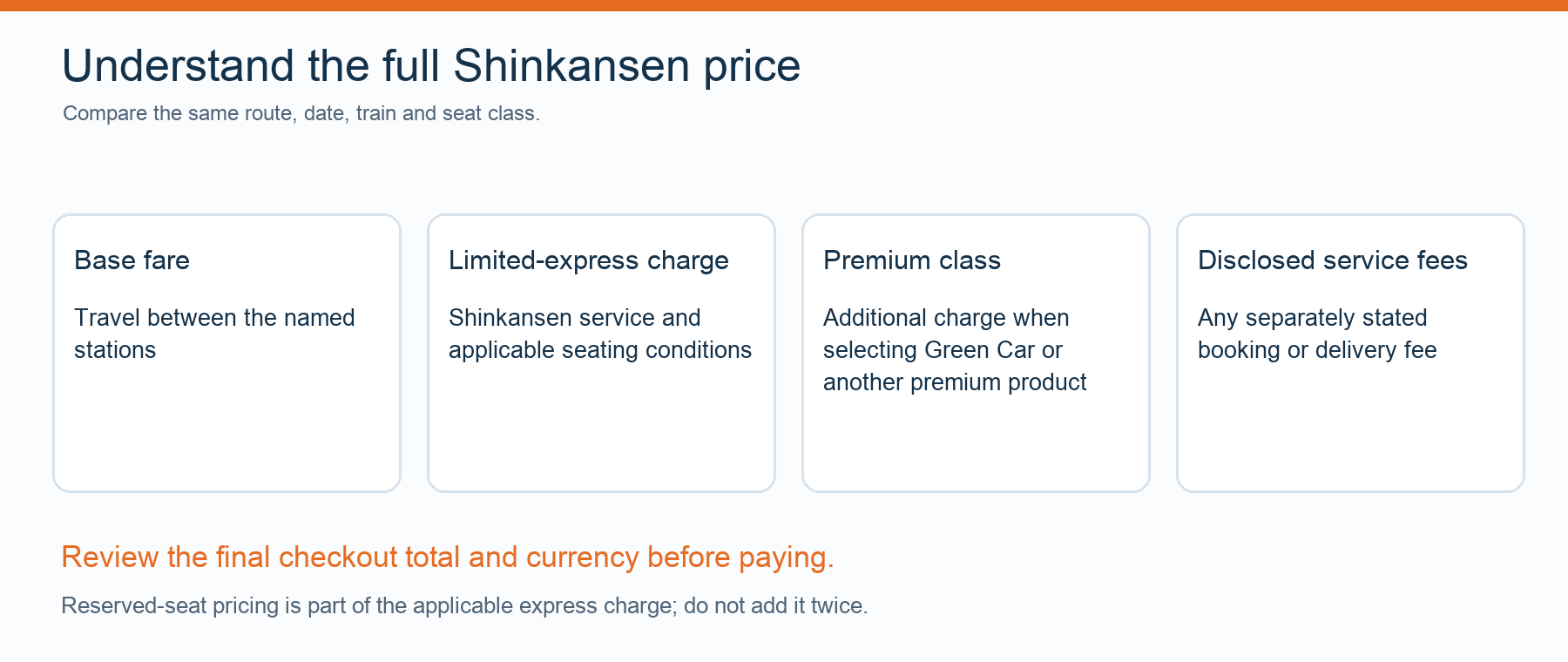
Japanese train tickets are split into two components. You pay a base fare for the distance traveled, plus a limited express charge for the speed of the bullet train. Understanding the Shinkansen Fare Breakdown: Base vs Express Charges [2026] helps explain why tickets cost what they do.
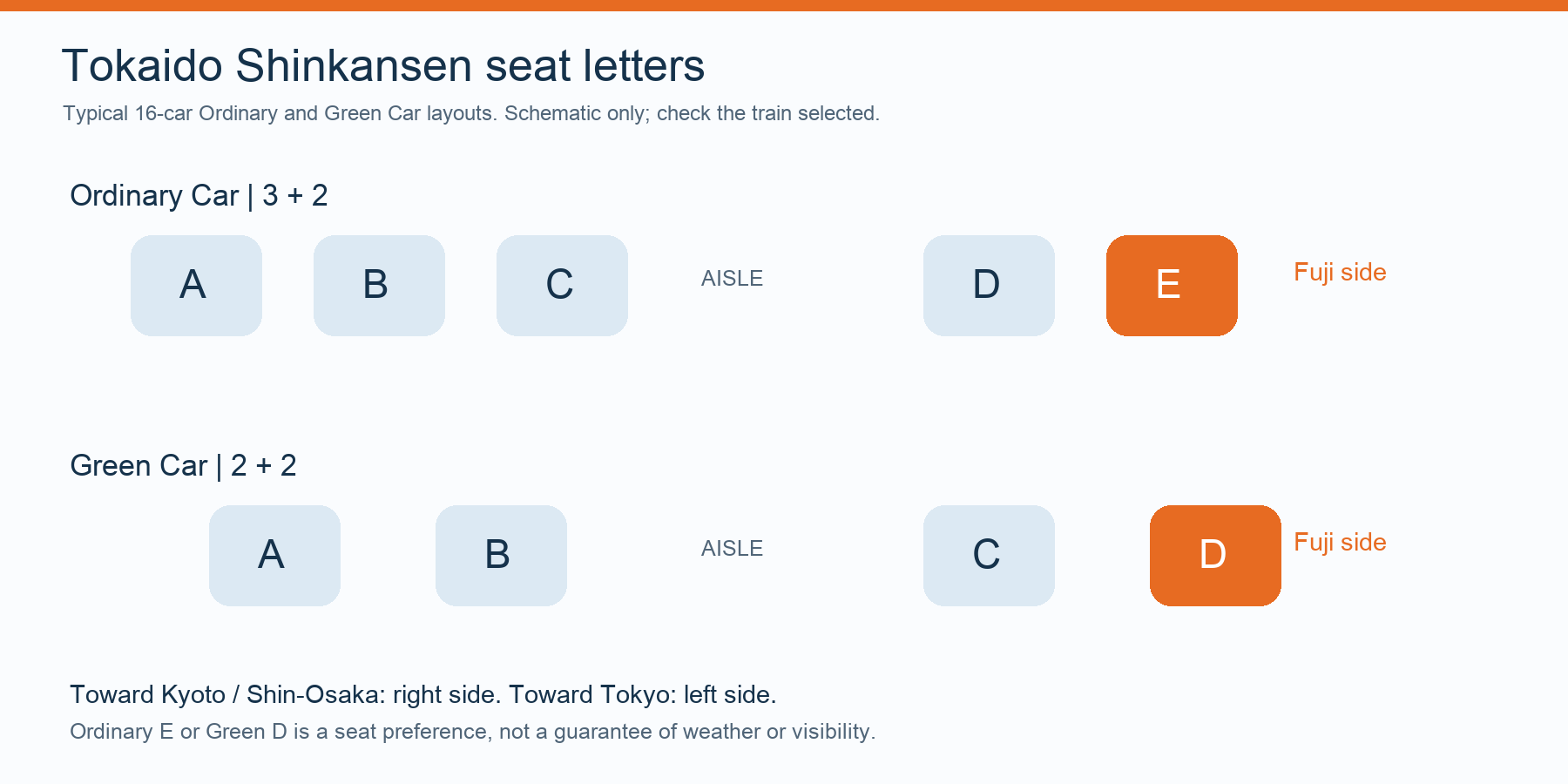
For a five-hour journey, seat selection matters immensely. Ordinary class seats are arranged in a 3-2 configuration. They recline generously, and the legroom puts most domestic airlines to shame. But if you want genuine luxury, look at the Green Car. Upgrading to the Green Car for the Fukuoka to Tokyo Shinkansen journey costs ¥30,650, buying you significantly wider seats, fewer passengers, and a quieter five-hour ride.
Green Car seats feature a 2-2 layout. You get a footrest, a personal reading light, and near-silence in the cabin. Is it worth the premium? If you plan to sleep or work on a laptop, absolutely.
| Seat Class | 2026 Estimated Price (Adult) | Configuration | Booking Link |
|---|---|---|---|
| Unreserved (Ordinary) | ¥22,220 | 3-2 Layout | Book Unreserved |
| Reserved (Ordinary) | ¥23,390 | 3-2 Layout | Book Reserved |
| Green Car (First Class) | ¥30,650 | 2-2 Layout | Book Green Car |
Prices fluctuate slightly during peak holiday seasons like Golden Week or New Year. According to official data from JR Central, peak season surcharges add roughly ¥400 to reserved seat tickets. To avoid sold-out trains, always book your train tickets online well in advance.
Hakata Station Amenities: Preparing for Your Journey
Because you will be on the train for nearly five hours, preparation at Hakata Station is vital. Hakata is one of Japan's largest and most well-equipped transit hubs. Before passing through the Shinkansen ticket gates, take advantage of the massive food halls located in the basement levels (Depachika) of the connected Hankyu department store.
Inside the Shinkansen concourse itself, you will find several Ekiben (station bento) shops. Kyushu is famous for its food, so look for bentos featuring mentaiko (spicy cod roe), Kagoshima black pork, or Miyazaki beef. Grab plenty of water or green tea, as the onboard snack carts have limited selections and higher prices.
Onboard Experience: Surviving a 5-Hour Bullet Train Ride
Five hours on a train requires some expectation management. Fortunately, the N700S series trains operating on the Fukuoka to Tokyo Shinkansen route are engineered for long-haul comfort. Every window seat (and all seats in the Green Car) features a standard 100V Japanese power outlet, allowing you to keep your phone or laptop fully charged.
Free onboard Wi-Fi is available, though the connection drops when the train passes through the many tunnels between Fukuoka and Osaka. Western-style restrooms are located every other car, and they are kept spotlessly clean by the onboard staff. If you need a break from your seat, there are designated standing areas near the doors and small smoking rooms located in specific cars (usually cars 3, 10, and 15).
The Five-Hour Dilemma: Should You Fly Instead?

Five hours on a train sounds brutal until you remember the alternative. Fukuoka Airport is famously close to the city center, making a domestic flight to Haneda Airport highly tempting. But air travel hides a lot of dead time.
You have to arrive at the airport early. You wait in security lines. You wait at baggage claim. Then you face a 40-minute monorail or train ride from Haneda into central Tokyo. While a flight takes only two hours in the air, the total door-to-door transit time perfectly matches the five-hour Fukuoka to Tokyo Shinkansen journey once you factor in security and airport transfers.
The train wins on comfort. You can buy a bento box, stretch your legs, use reliable onboard Wi-Fi, and avoid the physical toll of cabin pressure changes. Plus, trains rarely suffer from weather delays. If you are comparing this to other long routes, like the Tokaido Shinkansen Tickets & Guide: Tokyo to Osaka [2026], you will find the rail network's reliability is unmatched.
6 Pro Tips for the Cross-Country Journey
Spending half a day on a train requires a bit of strategy. Here is how veteran travelers handle the Fukuoka to Tokyo Shinkansen 2026 route without losing their minds.
- Reserve Oversized Luggage Seats: If your suitcase dimensions (height + width + depth) exceed 160cm, you are legally required to book an oversized luggage seat. These are the last row of seats in a train car. They sell out fast. If you show up with a massive suitcase and no reservation, the conductor will fine you ¥1,000 and move your bag.
- Book Seat E for the Mountain: The train passes Mount Fuji roughly 45 minutes before arriving in Tokyo. You want a window seat on the left side of the train (Seat E). Read more about Mount Fuji View Seats: Book Seat E for Tokyo to Kyoto (2026) to ensure you do not miss the view.
- Bypass Credit Card Rejections: The official JR websites are notoriously strict with foreign Visa and Mastercards. Transactions fail constantly. To save yourself hours of frustration, Book Shinkansen Tickets Without a Japanese Credit Card [2026] by using a trusted third-party gateway like shinkansentickets.net.
- Buy an Ekiben at Hakata: Do not rely on the train's snack cart. Hakata Station is food heaven. Buy a high-quality bento box (ekiben) featuring local Kyushu specialties like mentaiko (spicy cod roe) before you pass through the ticket gates.
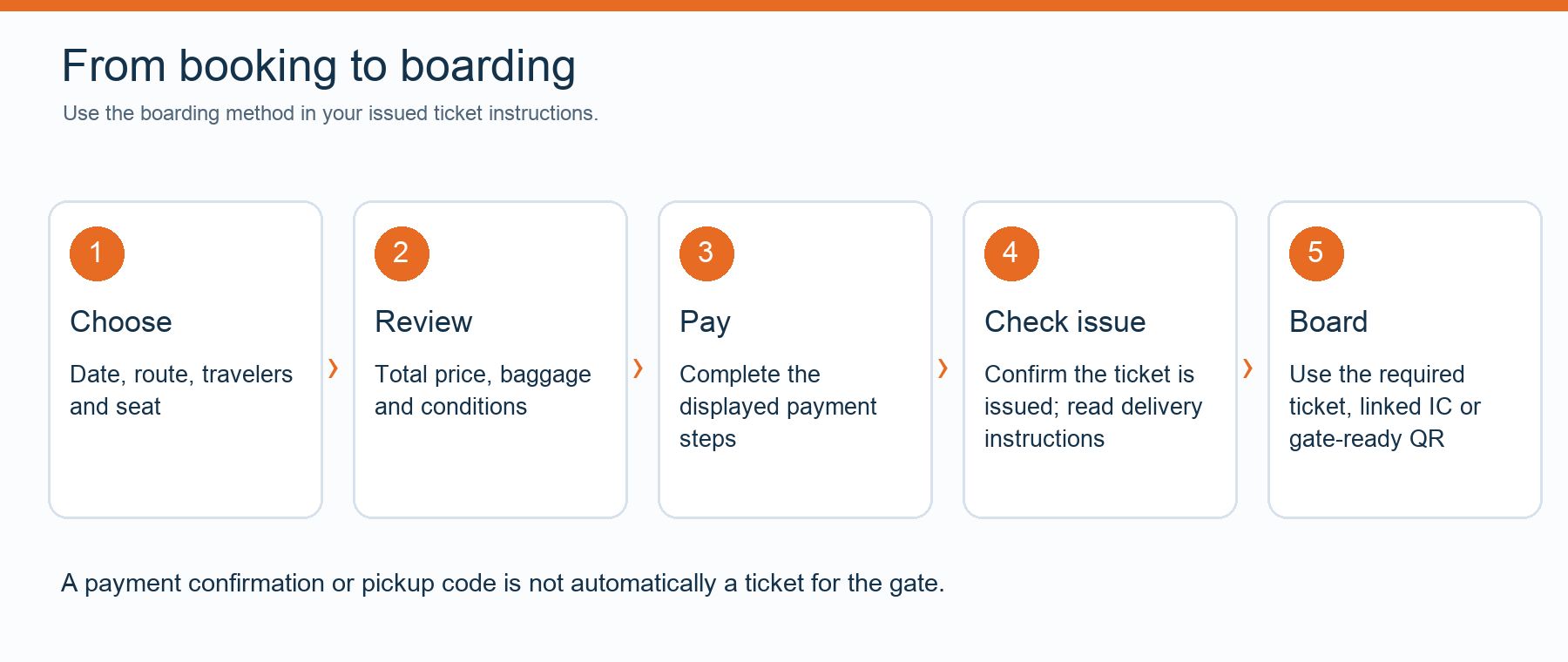
- Skip the Ticket Machine Lines: Hakata Station gets wildly crowded, especially on Monday mornings and Friday evenings. Figuring out How to Pick Up Shinkansen Tickets: Skip 45-Min Lines [2026] by using QR codes or IC cards will save your sanity.
- Time Your Arrival: Try to arrive in Tokyo between 1:00 PM and 4:00 PM. If you roll into Tokyo Station at 5:30 PM, you will be dragging your luggage through the worst rush hour foot traffic on the planet.
Frequently Asked Questions
How long is the Fukuoka to Tokyo Shinkansen?
The fastest Fukuoka to Tokyo Shinkansen journey takes exactly 4 hours and 56 minutes on the direct Nozomi service. This route covers a total distance of 1,069 kilometers, connecting Hakata Station in Kyushu to Tokyo Station.
How much does the Fukuoka to Tokyo Shinkansen cost in 2026?
A standard reserved seat on the Fukuoka to Tokyo Shinkansen Nozomi service costs approximately ¥23,390 in 2026. Prices may vary slightly depending on the season and whether you choose a non-reserved seat or a Green Car (first-class) upgrade.
Which Fukuoka to Tokyo Shinkansen train should I take?
The direct Nozomi train is the best option for traveling from Fukuoka to Tokyo as it requires no transfers and offers the shortest travel time. While Sakura and Hikari trains are available, they require a transfer at Shin-Osaka and take significantly longer.
Can I use the Japan Rail Pass on the Fukuoka to Tokyo Shinkansen route?
Yes, the Japan Rail Pass covers the Fukuoka to Tokyo Shinkansen route, but a supplemental fee is required to ride the fastest Nozomi trains. Alternatively, pass holders can use a combination of the Sakura and Hikari trains for no extra charge, though this adds about an hour to the journey.
Where do I board the Shinkansen in Fukuoka?
You board the Shinkansen at Hakata Station, which serves as the main high-speed rail terminal for Fukuoka City. Although the city is named Fukuoka, the bullet train station is exclusively referred to as Hakata in booking systems and on station signage.
How can I see Mount Fuji on the Fukuoka to Tokyo Shinkansen?
To see Mount Fuji when traveling from Fukuoka to Tokyo, you must book a seat on the left-hand side of the train (Seat E in standard cars). The mountain becomes visible roughly 40 to 45 minutes before the train arrives at Tokyo Station, shortly after passing Shizuoka.

![How to Pick Up Shinkansen Tickets: Skip 45-Min Lines [2026]](https://static.trainbook.online/images/articles/cover-1774027511628.png)
![Shinkansen Fare Breakdown: Base vs Express Charges [2026]](https://static.trainbook.online/images/articles/cover-1774027506096.png)
![Shinkansen Family Tickets & Group Booking: How to Sit Together [2026]](https://static.trainbook.online/images/articles/cover-1774028141349.png)