Hiroshima to Tokyo Shinkansen, Nozomi train, Shinkansen ticket price 2026, Hiroshima Station, Tokyo Station, Tokaido-Sanyo ShinkansenGeneral15 min read

Hiroshima to Tokyo Shinkansen: 2026 Tickets & Timetables

Hiroshima to Tokyo Shinkansen: 2026 Tickets & Timetables

Key Takeaway: The direct Nozomi train on the Hiroshima to Tokyo Shinkansen route covers the 800km trip in exactly 3 hours and 58 minutes. Expect to pay ¥19,440 for a reserved ordinary seat in 2026. Skip the slower multi-transfer routes and book your direct tickets online early—especially if you're traveling during Golden Week, Obon, or New Year's—to secure your preferred seat and mandatory oversized luggage space. Early booking is your best weapon against sold-out trains and last-minute stress.

Eight hundred kilometers usually means a miserable day at an airport. But in Japan, it means a high-speed glide past coastal mountains and perfectly manicured tea fields. Riding the Hiroshima to Tokyo Shinkansen transforms what should be a grueling cross-country slog into a four-hour afternoon nap. The seats recline deep enough for proper rest, and the legroom puts almost every airline premium economy product to absolute shame.

I have traveled the Hiroshima to Tokyo Shinkansen more times than I can count. Most tourists fly this route to save a few bucks. And that is usually a massive mistake. By the time you factor in the 50-minute limousine bus ride to Hiroshima Airport, the tedious security lines, the one-hour flight, and the agonizing Narita Express ride into the city center, the train wins easily. Here's a real-world time breakdown:

  • Flying (Hiroshima - Narita - Tokyo): ~4.5-5.5 hours gate-to-gate.
  • Shinkansen (Hiroshima - Tokyo Station): 3 hours 58 minutes, city center to city center.
You step onto the platform in Hiroshima and step off right in the absolute center of Tokyo, ready to start exploring immediately. No baggage carousels. No waiting on the tarmac. No cramming into a bus for another hour.

Quick Overview: The Hiroshima to Tokyo Shinkansen Route

Photo illustrating Quick Overview: The Hiroshima to Tokyo Shinkansen Route

Here is exactly what you are signing up for when you book the Hiroshima to Tokyo Shinkansen. The journey spans almost half the country, cutting through major prefectures with incredible efficiency.

  • Distance: 806 kilometers (500 miles).
  • Fastest Travel Time: 3 hours 58 minutes via the direct Nozomi Shinkansen from Hiroshima to Tokyo.
  • 2026 Standard Price: ¥19,440 (Reserved Ordinary Seat).
  • First Train: Departs Hiroshima at 6:00 AM (Nozomi 80), arriving Tokyo at 9:57 AM.
  • Last Direct Train: Departs Hiroshima at 7:57 PM (Nozomi 64), arriving Tokyo at 11:55 PM.
  • Frequency: Up to three direct Nozomi trains per hour during peak daytime times, tapering to one every 45-60 minutes in the evening.
  • Major Stops: Shin-Kobe, Shin-Osaka, Kyoto, Nagoya, Shin-Yokohama, then Tokyo.

Route Highlights and Scenic Views from Hiroshima to Tokyo

This route is an incredible geographical cross-section of Japan. Leaving Hiroshima, you will catch fleeting glimpses of the Seto Inland Sea to the south. As you blast through Hyogo prefecture, keep your eyes peeled on the north side of the train—you can often spot the brilliant white walls of Himeji Castle towering over the city, especially on clear mornings. You will then cross the dense urban sprawl of Osaka, the historic temples of Kyoto (look for the towering Toji Pagoda shortly after leaving Kyoto Station), and the industrial powerhouse of Nagoya before making the final approach past Mount Fuji into Tokyo. Pro Tip: The section from Nagoya to Mishima offers the best, most sustained views of Mount Fuji, typically on the right side (south) of the train. It is basically a highlight reel of western and central Japan.

2026 Ticket Prices and Fare Breakdown for the Hiroshima to Tokyo Shinkansen

Photo illustrating 2026 Ticket Prices: Breaking Down the Costs

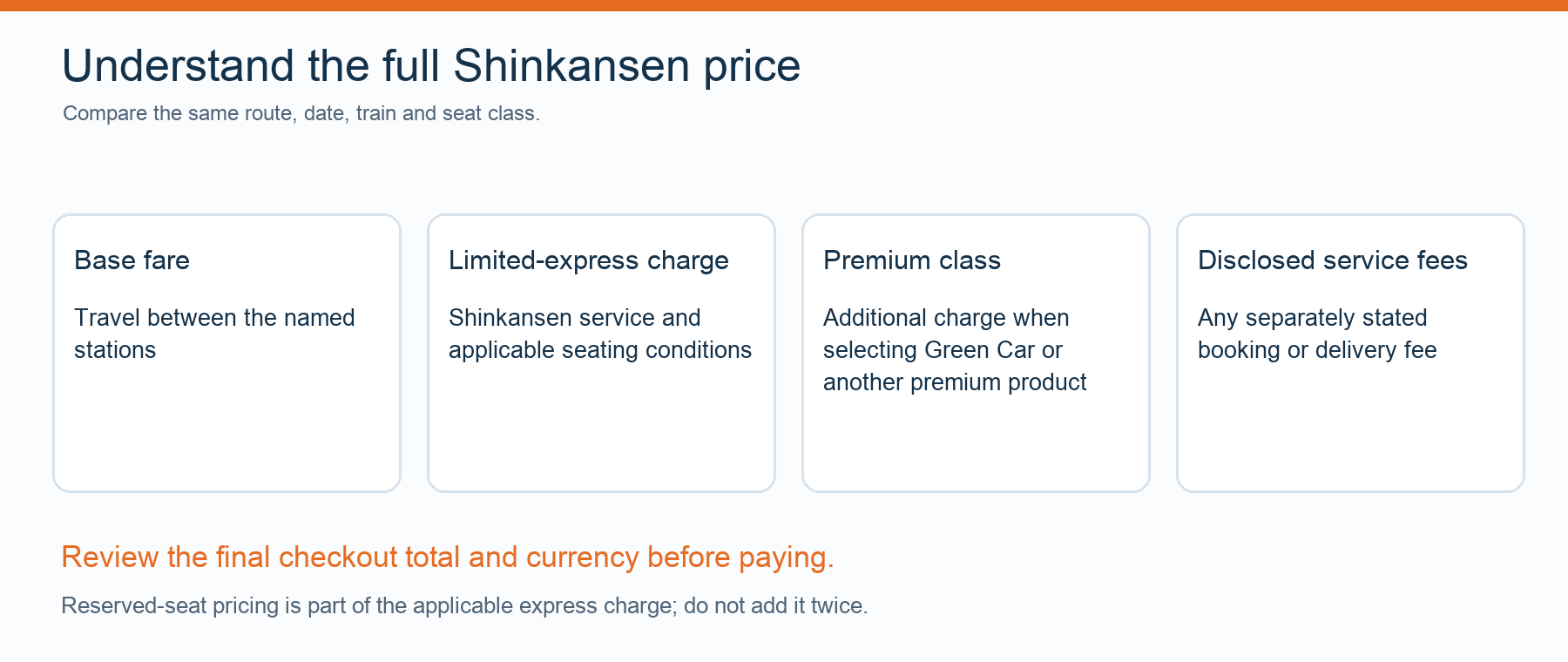
Let's talk numbers. Japanese train pricing confuses a lot of first-time visitors. You always pay two separate fees: a base distance fare (for the actual distance traveled) and a Shinkansen express surcharge (for the speed and convenience). A standard reserved seat for the Hiroshima to Tokyo Shinkansen costs exactly ¥19,440 in 2026. You can save a few hundred yen by risking an unreserved seat (¥18,380). But for a four-hour journey, standing in the aisle is a terrible gamble, especially during busy periods.

Prices remain remarkably stable year over year. The state-run rail companies rarely pull the dynamic pricing tricks that airlines love. The price you see in the table below is very close to what you will pay, with minor seasonal adjustments. To understand exactly how these two fees interact and see a full example ticket breakdown, you can read our Shinkansen Fare Breakdown: Base vs Express Charges [2026] guide.

2026 Hiroshima to Tokyo Shinkansen Fares (One-Way)
Seat Class Total Price (JPY) The Verdict Booking
Non-Reserved (Ordinary) ¥18,380 Risky for long journeys. Seats are first-come, first-served; you might stand for hours on busy trains. Book Non-Reserved
Reserved (Ordinary) ¥19,440 The sweet spot. Best value for a guaranteed seat. Recommended. Book Reserved
Green Car (First Class) ¥26,800 Luxurious. Perfect if you need to work, want extra space, or value quiet. Power outlets at every seat. Book Green Car

The Green Car upgrade costs roughly $45 USD extra depending on exchange rates. Is it worth it? For a business traveler or anyone seeking maximum comfort, absolutely. You get a wider, plusher seat, a much quieter cabin (it's strictly for reserved passengers), a guaranteed power outlet, and often better air circulation. If you are debating the upgrade, check out our detailed comparison on Shinkansen Seat Classes: Reserved vs Non-Reserved vs Green Car [2026]. When you are ready to secure your spot, check latest Hiroshima to Tokyo Shinkansen tickets on shinkansentickets.net.

Peak Season Surcharges and Mandatory Reservations for Holiday Travel

While base prices are stable, Japan Railways implements strict rules during the three major holiday periods: Golden Week (late April to early May), Obon (mid-August), and New Year's (late December to early January). During these windows, a small peak-season surcharge of ¥200 to ¥400 applies. More importantly, the Nozomi train becomes entirely reserved during these holidays. Non-reserved cars do not exist during peak travel times. Do not show up at the station expecting to buy a ticket on the day of travel—you will be out of luck. You must secure your holiday tickets weeks, if not months, in advance to guarantee a seat. This is the single most important tip for stress-free holiday travel.

2026 Seasonal Adjustments: Reserved Seats
Season Type Price Adjustment Estimated Total (JPY)
Regular Season Base Price ¥19,440
Off-Peak (e.g., late January, February) - ¥200 ¥19,240
Peak (Golden Week, Obon, New Year's) + ¥200 to ¥400 ¥19,640 - ¥19,840

Choosing Your Train: Nozomi vs. Sakura vs. Hikari Comparison

Photo illustrating The Nozomi vs. Sakura Debate: Choosing Your Train

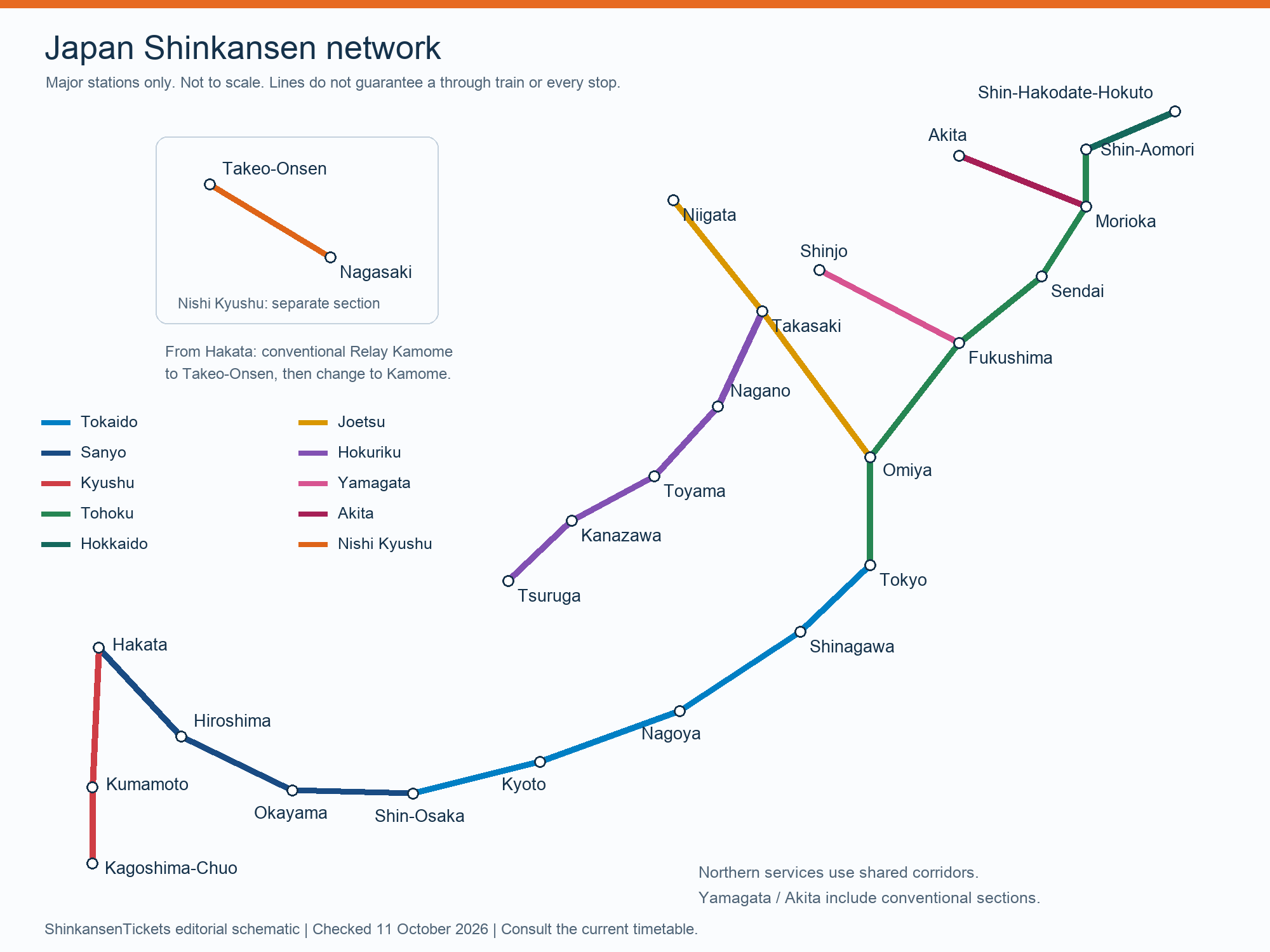
You have a few choices here. The Tokaido-Sanyo line stretches seamlessly between these two cities. But not all trains run the full length. The direct Nozomi is the only train on the Hiroshima to Tokyo Shinkansen line making the complete run without requiring a frustrating transfer at Shin-Osaka.

Some budget travelers try to game the system. They take a Sakura train from Hiroshima to Shin-Osaka, then switch to a Hikari train to Tokyo. This saves about ¥500. It also adds a solid hour or more to your trip and forces you to drag your luggage through a crowded, massive transfer station, often needing to change platforms. Do not do this. Your vacation time is worth way more than five dollars. The direct route is the premium, hassle-free experience.

Train Types on the Hiroshima to Tokyo Shinkansen Route
Train Name Direct to Tokyo? Travel Time Best For
Nozomi Yes 3h 58m Everyone. It is the fastest, easiest, and most convenient option.
Sakura + Hikari No (Transfer required at Shin-Osaka) 5h 10m+ Regional JR Pass holders (e.g., JR West Sanyo-San'in Pass) looking to save money on the surcharge.
Kodama No (Multiple transfers likely) 6h 30m+ Only if you want to stop at every single station. Not recommended for long-distance travel.

Why Choose the Nozomi for Direct Hiroshima to Tokyo Travel

According to JR Central, the Nozomi operates at speeds up to 300 km/h (186 mph) on this stretch. It only stops at major hubs like Kobe, Osaka, Kyoto, and Nagoya. This minimizes dwell time and ensures a smooth, uninterrupted ride across Japan. For the vast majority of travelers without a JR Pass, the Nozomi is the definitive choice. Book your direct Nozomi tickets here.

Transfer Routes and Japan Rail Pass Considerations

Important JR Pass Note: The standard nationwide Japan Rail Pass does not cover the Nozomi or Mizuho trains. Pass holders must use the Hikari (which runs the full route with a transfer) or Sakura services. If you have a JR Pass, your journey will involve a transfer at Shin-Osaka unless you purchase a separate, more expensive Nozomi/Mizuho supplement ticket at the station. Carefully weigh whether the cost of the pass plus the inconvenience of a transfer is better value than buying a direct Nozomi ticket outright. For many, especially those not using the pass for multiple other trips, buying separate Nozomi tickets can be simpler.

Timetables, Schedules, and Departure Frequencies for Hiroshima to Tokyo

Trains leave constantly. You rarely wait long for the next departure. During the morning and afternoon rush hours, a direct Nozomi Shinkansen from Hiroshima to Tokyo departs every 20 to 30 minutes. Frequency drops in the late evening.

The first train of the day (Nozomi 80) leaves Hiroshima at exactly 6:00 AM. It pulls into Tokyo Station at 9:57 AM. This is perfect if you have a midday flight out of Narita or Haneda, or want to maximize your first day in Tokyo. The final direct train of the night (Nozomi 64) rolls out at 7:57 PM. Miss that one, and you are sleeping in Hiroshima. Always double-check the live schedule online, as minor adjustments can happen.

First and Last Direct Trains from Hiroshima to Tokyo

Plan your departure around the first train at 6:00 AM or the last at 7:57 PM to optimize your travel schedule for the Hiroshima to Tokyo Shinkansen route. There are also helpful early-morning departures at 6:16 AM and 6:30 AM if you want a few extra minutes of sleep.

Navigating Hiroshima Station Before You Board the Shinkansen

Hiroshima Station is a major hub. Before you head up to the Shinkansen platforms (Tracks 13 and 14 for Tokyo-bound trains), spend 15-20 minutes in the "ekie" shopping complex on the north side of the station. It is a food lover's paradise. You can pick up fresh momiji manju (maple leaf-shaped cakes), famous Hiroshima-style tsukemen dipping noodles, or world-class bento boxes from shops like Hiroshima Station Ekiben Kan. Arrive at the station at least 30-40 minutes before your scheduled departure to navigate the large station, pass through ticket gates (with your QR code or paper ticket), use the restroom, grab supplies, and find your platform without rushing.

When you finally arrive in the capital, the sheer scale of the terminal can be overwhelming. Tokyo Station is a subterranean labyrinth. Before you go, skim our Tokyo Shinkansen Stations Guide 2026: Save 15 Minutes so you know exactly which exit to take. Tokyo Station has dozens of exits, and knowing whether you need the Marunouchi (central, historic) or Yaesu (eastern, closer to Ginza) side will save you a massive headache upon arrival.

7 Insider Tips for a Smooth Hiroshima to Tokyo Shinkansen Journey

Four hours on a train requires a little bit of strategy. Here is how you make your Hiroshima to Tokyo Shinkansen trip completely frictionless.

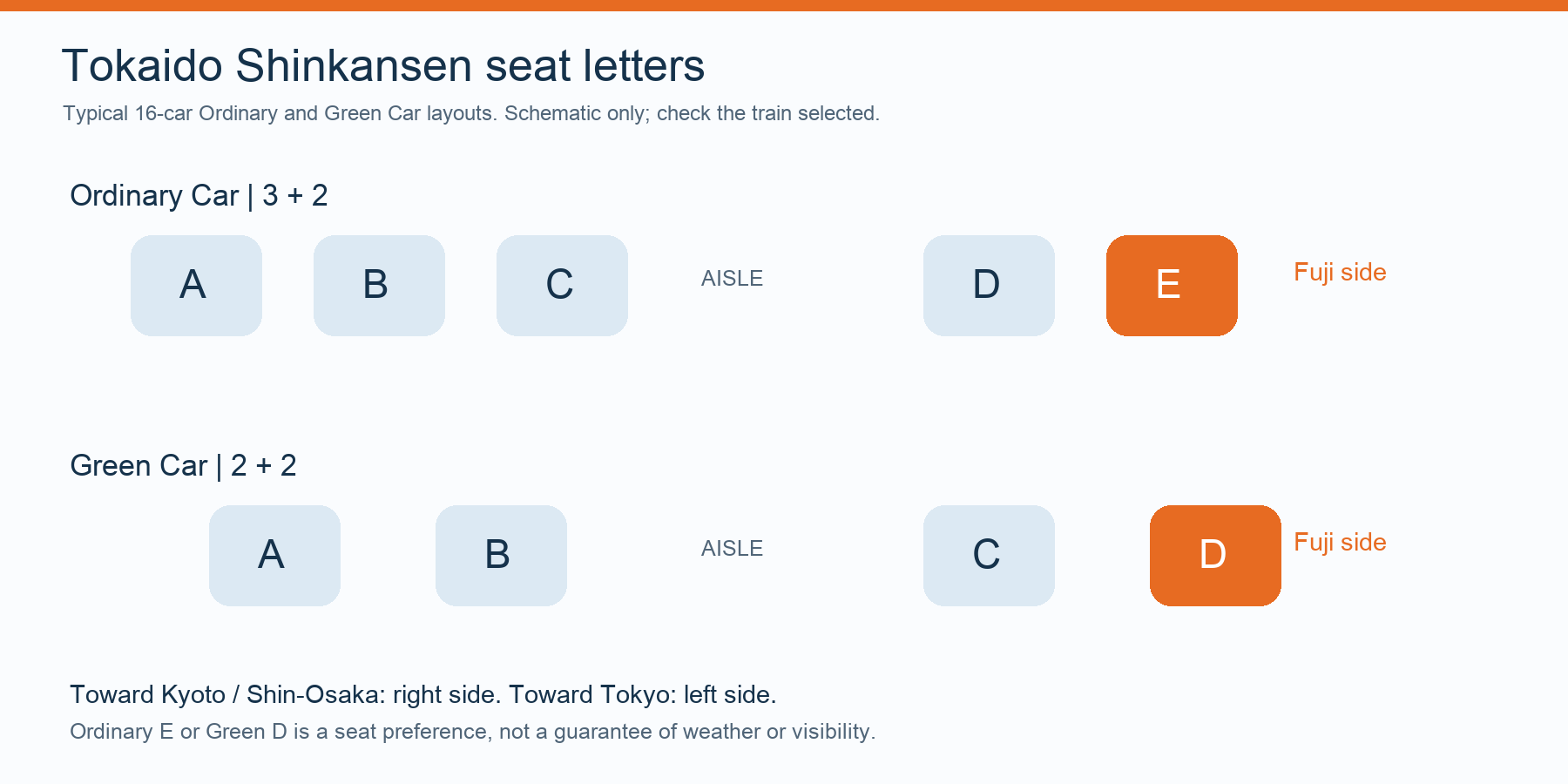
  1. Book Seat E for the Mountain View: On the way to Tokyo, Mount Fuji will appear on the left side (north side) of the train roughly 45 minutes before arrival. To guarantee a window view, request or book Seat E (or Seat D in the Green Car's 2x2 layout). Our Mount Fuji View Seats: Book Seat E for Hiroshima to Tokyo (2026) guide has the exact seat map.
  2. Buy an Ekiben in Hiroshima: Do not rely on the train's snack cart, which has been largely phased out. The food scene at Hiroshima Station's "ekie" is incredible. Grab a massive bento box featuring local oysters (kaki) or anago (saltwater eel) over rice. It's a delicious part of the travel experience.
  3. Register Oversized Luggage: This is critical. If your suitcase dimensions (height + width + depth) exceed 160cm (up to a maximum of 250cm), you must book a specific oversized baggage seat located at the very back (or sometimes front) of the train car, which have designated storage areas. Fail to do this, and the conductor will politely but firmly fine you ¥1,000 onboard and move your bag. Save yourself the headache and book the right luggage seat online before they sell out. Regular backpacks and carry-ons are fine in the overhead racks.
  4. Use Foreign Credit Cards Wisely: The official Japanese rail websites (like SmartEX or the JR Central English site) are notorious for declining international Visa and Mastercard payments due to security blocks. We built a reliable workaround. See Book Shinkansen Tickets Without a Japanese Credit Card [2026] for the exact, tested steps.
  5. Dress in Layers: Japanese trains are heavily air-conditioned in the summer (around 26°C/79°F) and aggressively heated in the winter (around 20-22°C/68-72°F). A light sweater or jacket you can easily take off is essential for comfort.
  6. Connect to the Free Wi-Fi Early: The "Shinkansen Free Wi-Fi" network is available on all Nozomi trains. The connection is good for emails and messaging but can be slow for streaming. The registration portal can be incredibly slow once the train fills up. Connect to the network and complete the login process while still sitting at the station.
  7. Watch the Weather & Know Your Rights: Typhoons (August-October) can halt the Tokaido line entirely. Check the Japan Meteorological Agency forecast. If service is suspended due to weather, your ticket is typically eligible for a full refund or free rebooking. Keep your ticket safe.

Seat Selection for Mount Fuji Views on the Hiroshima to Tokyo Shinkansen

To catch a glimpse of Mount Fuji, book Seat E on the left side (when facing forward) of the train when heading from Hiroshima to Tokyo. This view occurs approximately 45 minutes before arrival at Tokyo Station, between Shin-Fuji and Shin-Yokohama stations. The view is best on clear days.

Food and Ekiben Recommendations for Your Train Journey

Purchase a local ekiben (train bento) at Hiroshima Station's "ekie" for a delicious and authentic meal during your ride, as onboard food options are now extremely limited. Options range from oyster bento to Hiroshima-style okonomiyaki.

Luggage Rules and Oversized Baggage Seats on the Shinkansen

Ensure your luggage meets size requirements (under 160cm total dimensions for regular storage) or reserve a designated oversized baggage seat in advance to avoid fines and disruptions. This is mandatory for large suitcases.

Payment Tips for International Travelers Booking Shinkansen Tickets

Use alternative methods if your foreign credit card is declined on official Japanese booking sites, as outlined in our dedicated guide. Booking through a reliable international partner like shinkansentickets.net can bypass these issues.

Comfort and Connectivity Onboard the Nozomi Shinkansen

Dress in layers for temperature variations and connect to the free Wi-Fi early to ensure smooth internet access throughout your trip. All seats have fold-down trays and reading lights.

Weather and Typhoon Considerations for Shinkansen Travel

Monitor weather forecasts during typhoon season (August-October) to avoid potential service disruptions on the Tokaido line. Have a flexible backup plan for critical connections.

Frequently Asked Questions About the Hiroshima to Tokyo Shinkansen

How long is the Shinkansen from Hiroshima to Tokyo?

The direct Nozomi Shinkansen takes exactly 3 hours and 58 minutes to travel the 806-kilometer distance from Hiroshima to Tokyo. Slower services like the Hikari or Kodama require transfers and can take 5 to 6.5+ hours, making the direct Nozomi the undisputed fastest option.

How much does a Shinkansen ticket from Hiroshima to Tokyo cost?

A standard reserved seat on the Hiroshima to Tokyo Shinkansen costs ¥19,440 in 2026. Non-reserved seats are slightly cheaper at ¥18,380, while Green Car (first class) tickets are ¥26,800. These are one-way fares.

What is the last direct train from Hiroshima to Tokyo?

The last direct Nozomi train departs Hiroshima Station at 7:57 PM and arrives at Tokyo Station at 11:55 PM. This is a very popular service. Travelers are strongly advised to book this train in advance and check the live schedule as times may shift slightly during holiday periods.

Do I need to book Shinkansen tickets in advance?

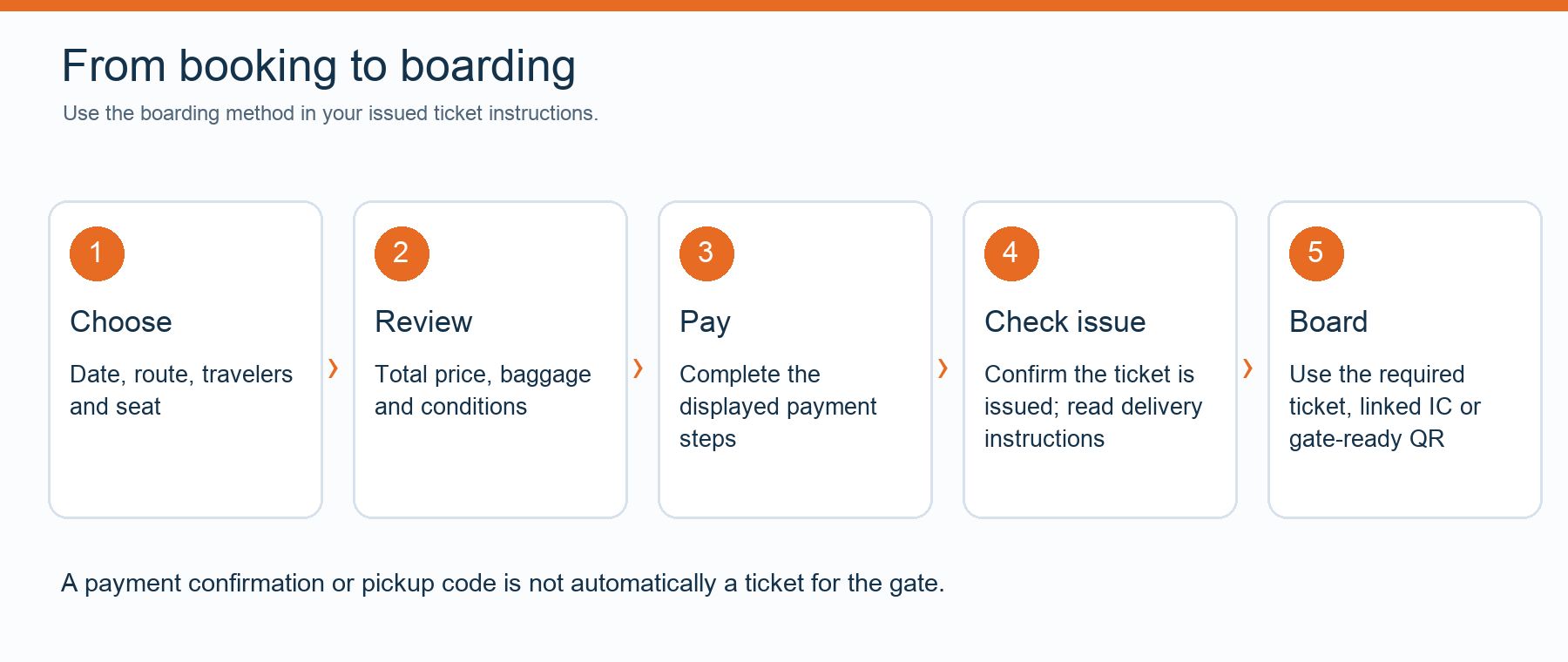
Advance booking is highly recommended for reserved seating to guarantee a seat, especially for the first and last trains of the day, and is mandatory if you are carrying oversized luggage that requires specific storage areas. Online booking allows you to skip the ticket machine lines at Hiroshima Station and choose your exact seat. You can check current availability and book here.

Can I buy food and drinks on the train?

Options are very limited. Traditional roaming snack carts have been phased out on the Tokaido Shinkansen. Green Car passengers can order drinks and snacks via a QR code system at their seat. For ordinary car passengers, it is highly recommended to purchase all food and drinks at Hiroshima Station before boarding. Vending machines are available on the platforms for drinks.

Is the Japan Rail Pass valid on the Nozomi train?

No. The standard nationwide Japan Rail Pass does not cover the Nozomi or Mizuho trains. Pass holders must use the Hikari or Sakura services (which require a transfer at Shin-Osaka) or purchase a separate, expensive supplement ticket at the station to use the Nozomi. This is a crucial detail for pass holders to consider when planning their Hiroshima to Tokyo journey.

Which Shinkansen route is best for Hiroshima to Tokyo?

The direct Nozomi service on the Hiroshima to Tokyo Shinkansen route is the best choice, offering the fastest travel time (3h58m) without the need for any train transfers. This route provides scenic views of coastal Japan, Himeji Castle, and Mount Fuji as you approach Tokyo, making it as enjoyable as it is efficient.

常见问题

How long is the Shinkansen from Hiroshima to Tokyo?

The direct Nozomi Shinkansen takes exactly 3 hours and 58 minutes to travel the 806-kilometer distance from Hiroshima to Tokyo. Slower services like the Hikari or Kodama require transfers and can take significantly longer.

How much does a Shinkansen ticket from Hiroshima to Tokyo cost?

A standard reserved seat on the Hiroshima to Tokyo Shinkansen costs ¥19,440 in 2026. Non-reserved seats are slightly cheaper at ¥18,380, while Green Car (first class) tickets command a higher premium.

What is the last direct train from Hiroshima to Tokyo?

The last direct Nozomi train departs Hiroshima Station at 7:57 PM and arrives at Tokyo Station at 11:55 PM. Travelers are advised to check the live schedule as times may shift slightly during holiday periods.

Do I need to book Shinkansen tickets in advance?

Booking in advance is highly recommended to secure reserved seating and is mandatory if you are carrying oversized luggage that requires specific storage areas. Online booking allows you to skip the ticket machine lines at Hiroshima Station.

Is the Japan Rail Pass valid on the Nozomi train?

The standard Japan Rail Pass does not fully cover the Nozomi; pass holders must purchase a supplemental 'Nozomi Mizuho Ticket' to use this fastest direct service. Alternatively, pass holders can use the Hikari service with a transfer at Shin-Osaka.

Which Shinkansen route is best for Hiroshima to Tokyo?

The direct Nozomi service on the Tokaido-Sanyo Shinkansen line is the best route, offering the fastest travel time without the need for any train transfers. This route provides scenic views of coastal Japan and Mount Fuji as you approach Tokyo.

Tags:Hiroshima to Tokyo ShinkansenNozomi trainShinkansen ticket price 2026Hiroshima StationTokyo StationTokaido-Sanyo Shinkansen