Nagoya to Tokyo Shinkansen: Times, Tickets & Stations
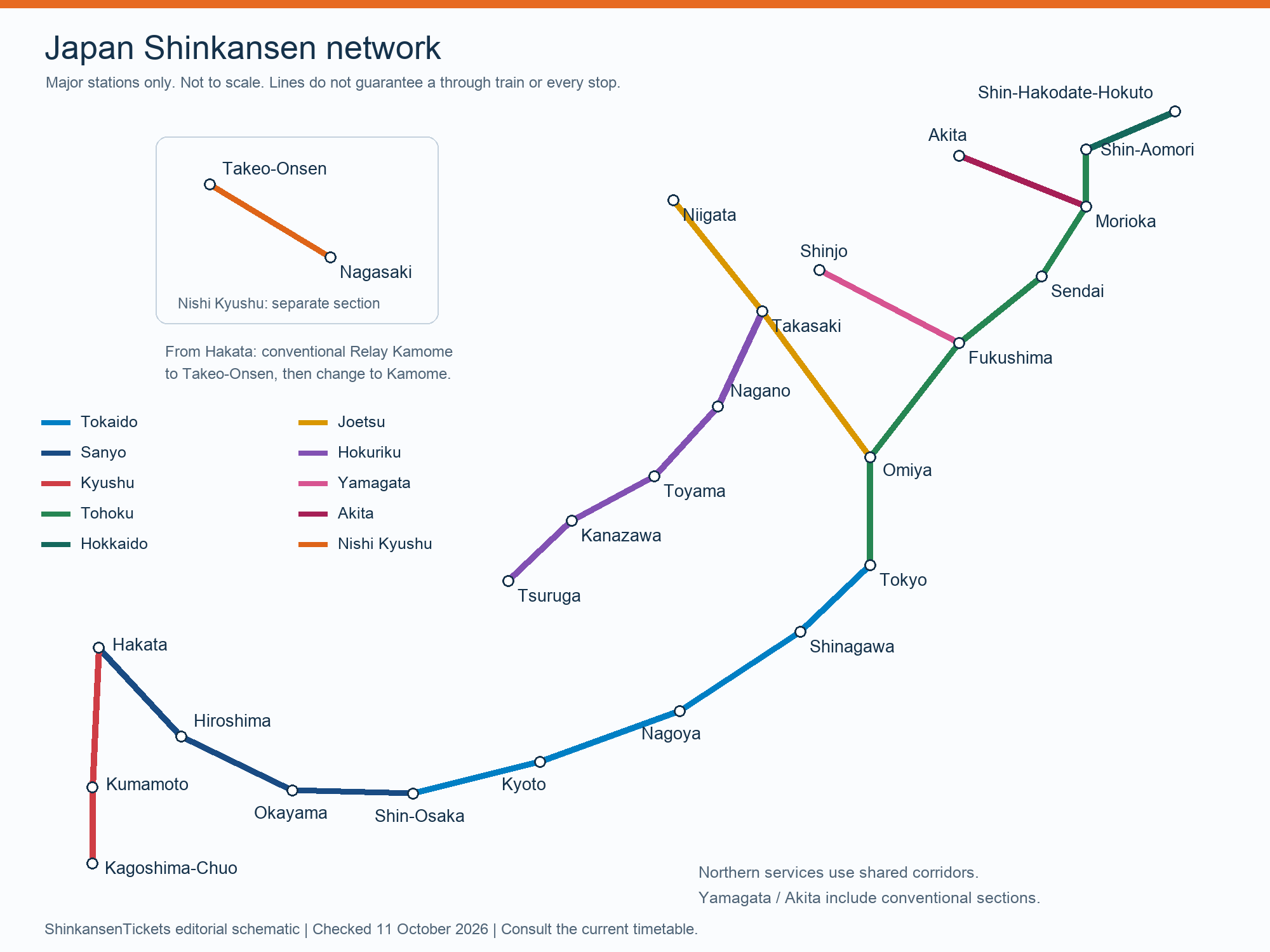
Nagoya to Tokyo uses the Tokaido Shinkansen corridor. Search from Nagoya to Tokyo or Shinagawa and compare the actual departure for your travel date. About 1 hour 40 minutes on a fast Nozomi; slower stopping patterns take longer. This is a planning guide, not a fixed timetable or fare quote.
Nagoya to Tokyo at a glance
| Planning point | What to check |
|---|---|
| Boarding station | Nagoya |
| Arrival station | Tokyo or Shinagawa |
| Services | Nozomi, Hikari or Kodama |
| Indicative travel time | About 1 hour 40 minutes on a fast Nozomi; slower stopping patterns take longer |
Choose the right stations
Use the JR Shinkansen area at Nagoya Station. Meitetsu Nagoya and Kintetsu Nagoya are separate railway facilities in the wider station district. If arriving from Chubu Centrair Airport, include the transfer from the airport railway to JR rather than treating the airport train as a direct Shinkansen connection.
For arrival, compare Shinagawa with Tokyo Station based on your final destination. A shorter Shinkansen segment is useful only if the local connection also works. Confirm that your selected train stops at the station named on your ticket.
Which train should you book?
Nozomi offers the quickest general option for this route. Hikari and Kodama have different stopping patterns; compare actual departures if your arrival time is flexible. The advertised best-case time is not a promise for every train.
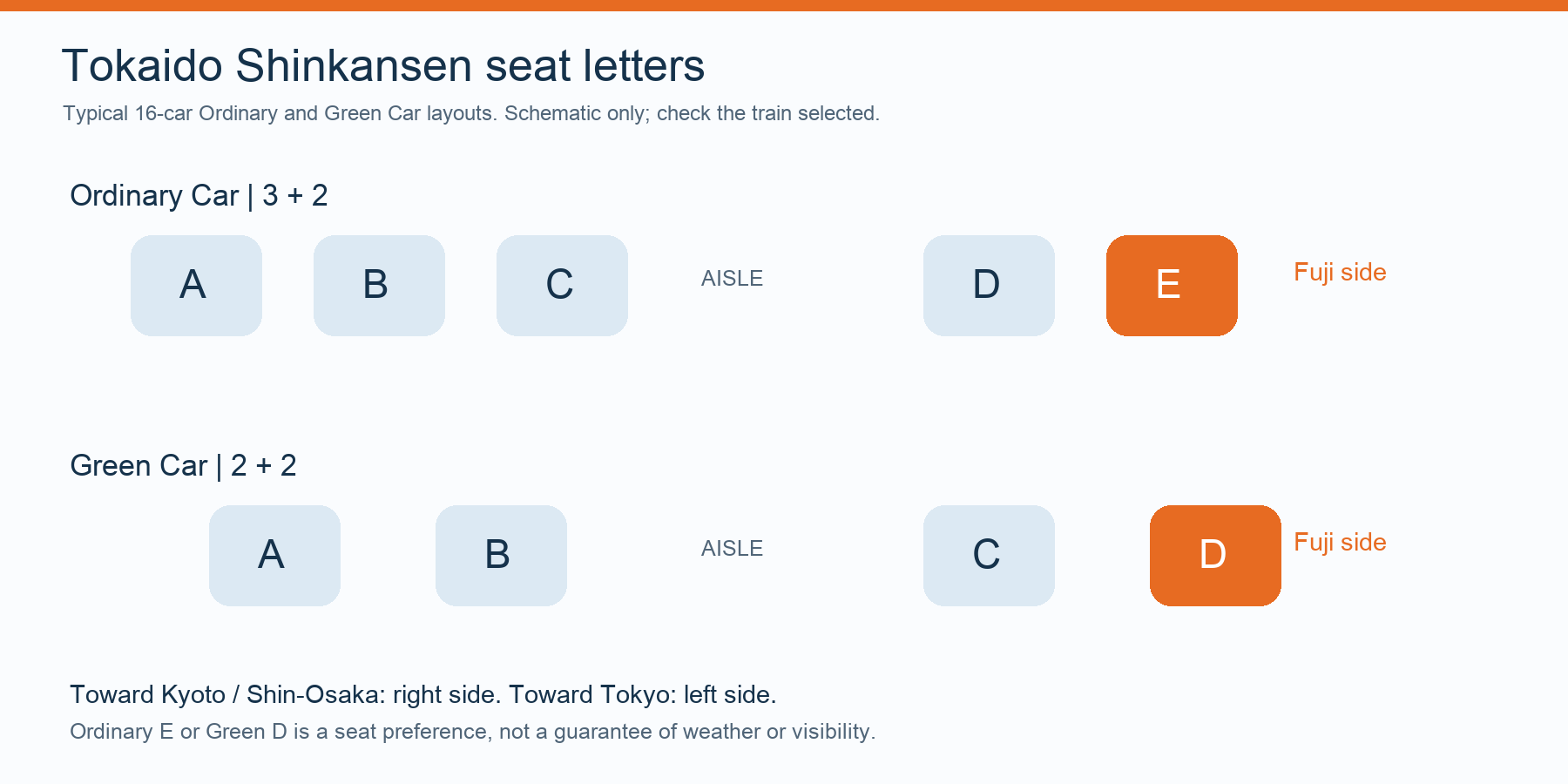
Toward Tokyo, Mount Fuji appears on the left on the usual Tokaido route. Ordinary Car E and Green Car D are the relevant window letters on the standard layout. Use the train's progress through the Shin-Fuji area rather than a fixed “minutes after boarding” claim.
Ticket prices and what the total includes
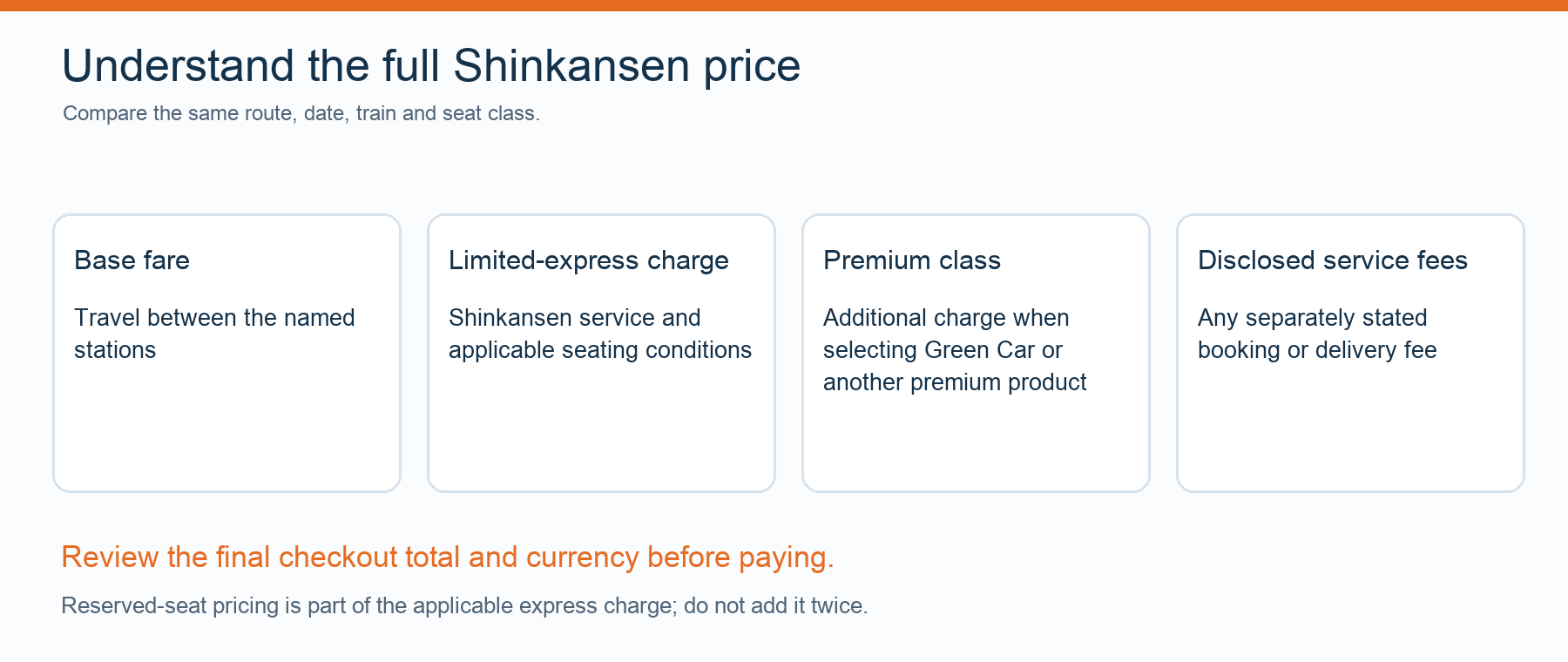
A complete Shinkansen journey requires the base fare and the relevant limited-express entitlement. Reserved seating, train category, premium class and the railway calendar can change the amount. Review any separately displayed booking fee and the currency before payment. A price copied from a previous year or converted to dollars is not a current offer.
Use the fare breakdown to compare like-for-like totals. Check the conditions for changes, cancellations and missed departures; flexibility depends on the product you purchase.
Seats, busy dates and luggage
Nozomi operates with all seats reserved during announced peak dates, including selected long weekends in 2026. Outside those dates, check the current car allocation. Non-reserved travel, where permitted, does not guarantee a seat or let you ignore train-specific ticket restrictions.
On the Tokaido, Sanyo and Kyushu Shinkansen, ordinary luggage with combined length, width and height over 160 cm and up to 250 cm requires a seat with an oversized-baggage area. Include wheels and handles when measuring. General limits include up to two qualifying items, no more than 30 kg per item and no dimension longer than 2 m. Exceptions apply to some types of equipment. The reservation-free compartment trial does not remove the reservation requirement for an oversized suitcase.
For adjacent seats, accessibility needs or a particular window, check availability before paying. A preference is not a confirmed allocation until the issued reservation identifies it. Read the seat-class guide for layout differences.
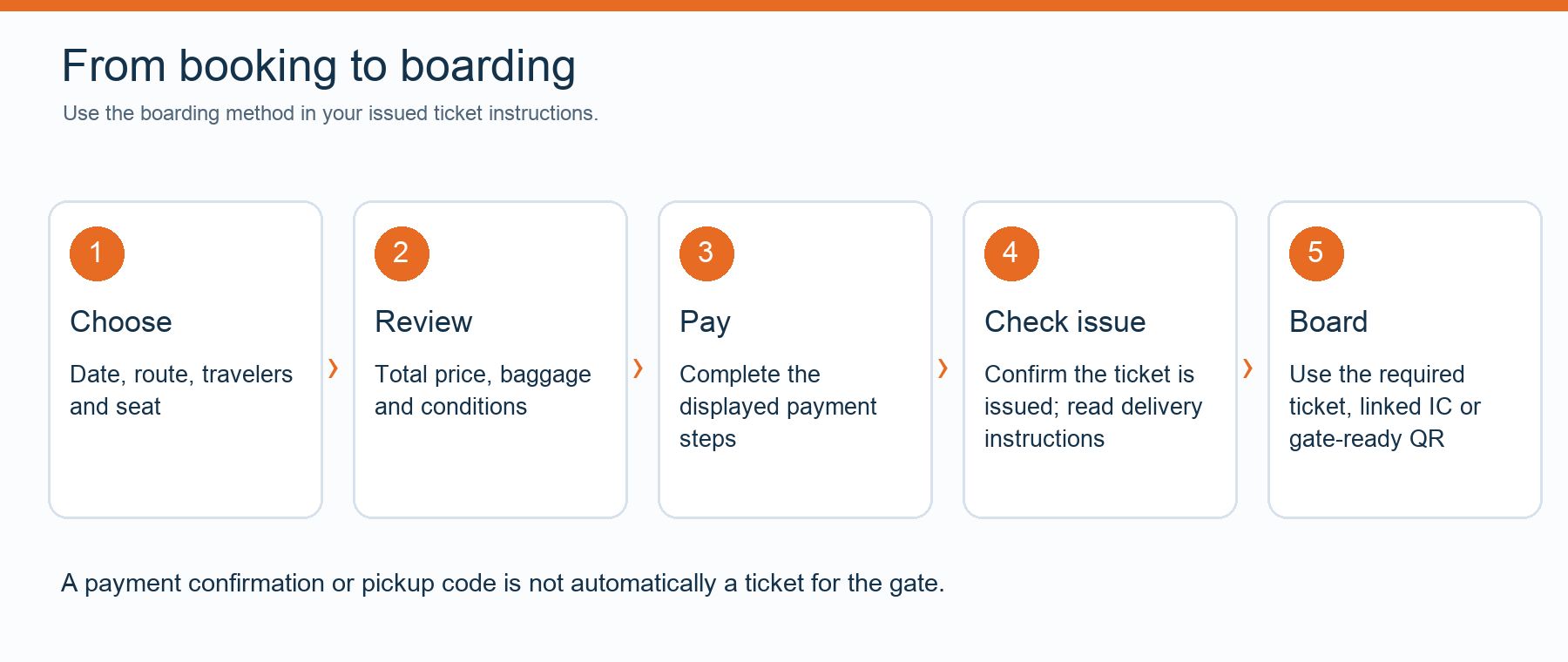
Booking and boarding checklist
- Search the correct direction, date and passenger ages.
- Compare the full journey, including any transfer and local connection.
- Choose the available seat and baggage arrangement.
- Read the total price, refund conditions and ticket delivery instructions.
- Before travel, check service notices and allow time to reach the correct gate.
A booking email, collection code and gate-ready QR code are different things. Use the method specified in your confirmation; not every ticket works by scanning a phone. Our ticket pickup guide explains what to check.
Search Nagoya to Tokyo departures and available ticket options.