Shinkansen Family Tickets: Child Fares & Seats Together
To travel together on the Shinkansen, reserve suitable seats for the whole party and check the issued assignments. Children aged 6–11 generally pay the JR child basic fare and limited-express charge. Younger children may travel free under specific conditions, but a separate reserved seat normally requires a child ticket. A booking request does not guarantee that everyone will sit together.
Child, young-child and infant tickets
JR Central distinguishes adults aged 12 and over, children aged 6–11, young children aged 1–5, and infants under one. School-entry exceptions can affect the age categories, so check the official rule when a child is close to a boundary. Enter passenger details according to the booking instructions.
| Passenger | Usual rule | Important qualification |
|---|---|---|
| Adult, 12 or older | Adult fare | Check the complete train and seat total. |
| Child, 6–11 | Half the adult basic fare and limited-express charge, with railway rounding | Green Car charges are not halved in the same way. |
| Young child, 1–5 | Up to two may accompany each adult or child passenger free under the applicable conditions | A separately occupied reserved seat requires a child ticket. |
| Infant, under one | Normally free when not occupying a separate reserved seat | Check the ticket required if reserving a seat for the infant. |
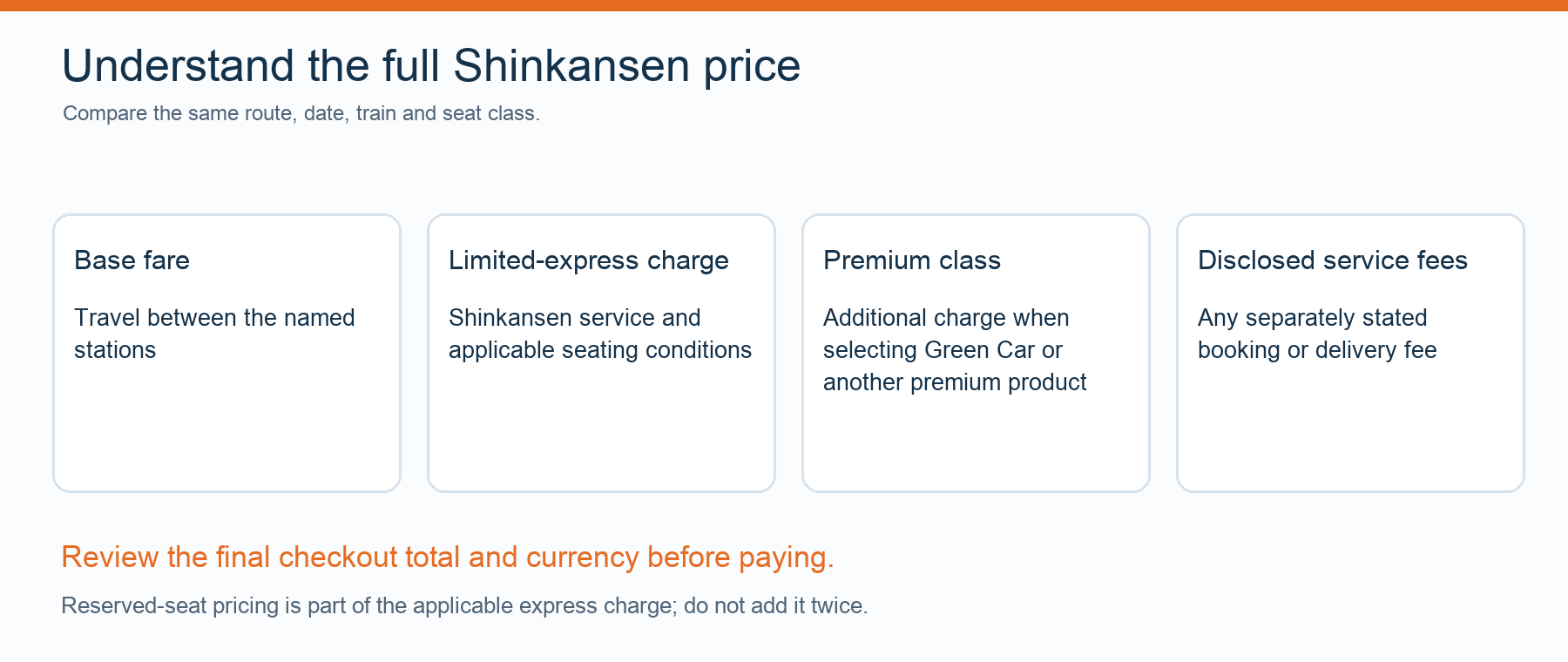
The third and subsequent young children accompanying one adult or child passenger require child tickets. A young child traveling alone also needs a ticket. Do not calculate the family total by simply halving every charge: premium cabin fees and fare rounding can produce a different amount. Read the fare breakdown and confirm the total for every passenger before paying.
Choose a seat combination that fits the group
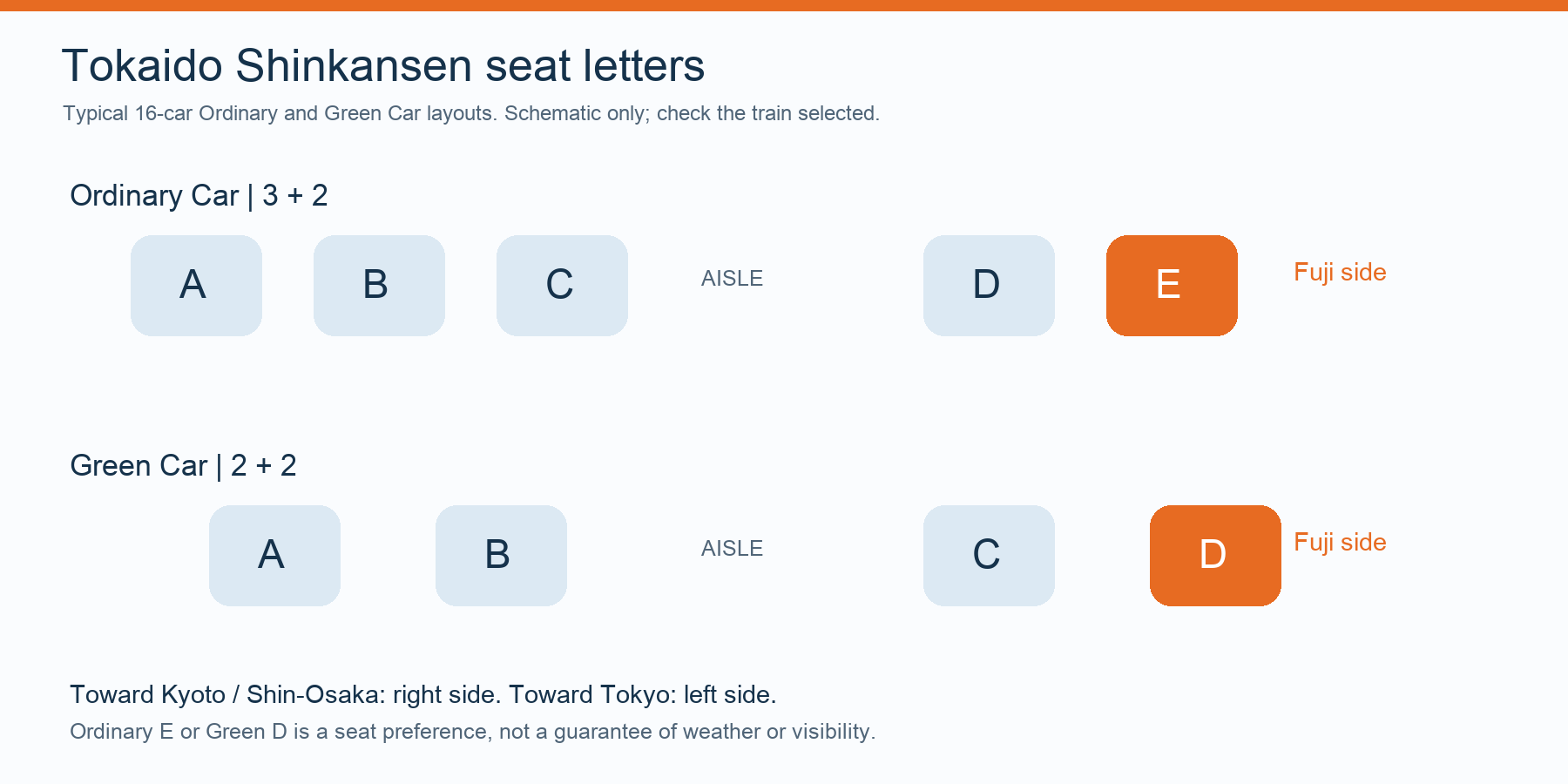
Typical Tokaido Ordinary Cars use A–B–C on one side of the aisle and D–E on the other. A family of three may prefer A–B–C in the same row. Four travelers can compare two adjacent D–E pairs in consecutive rows or another arrangement offered by the seat map. Other Shinkansen train sets can have different layouts.
Four seats A–B–C–D in one row span the aisle; they do not make a four-person facing booth. Some seats can rotate, but rotate only an appropriate bank occupied by your party, consider passengers beside or behind it, and follow staff instructions. Do not obstruct other passengers or assume a rotation feature on every train.
For a larger party, prioritize a practical arrangement such as neighboring rows in the same car. If the booking channel accepts a seating preference, check the actual car and seat numbers after issuance. Let every adult know the meeting point and train details in case the party separates at the station.
Ordinary Car or Green Car?
Ordinary Car is a practical choice for many families. Green Car offers a different cabin layout and more personal space, with a higher total fare. Children are welcome subject to the usual ticket and conduct rules. Choose according to budget, the actual layout and your needs rather than assuming that one cabin promises silence or that families cannot use it.
The seat classes guide shows why cabin class and reservation type are separate decisions. A reserved seat confirms one passenger's place, not the whole group's proximity.
Book around availability, luggage and busy dates
Standard JR reserved-seat sales usually begin at 10:00 Japan time one calendar month before travel. Some online products accept earlier requests or reservations under different conditions. An early request and a confirmed seat assignment are different stages; use the sales window stated for the product you buy.
Major holidays and certain busy periods can change Nozomi operations to all-reserved seating. Check the current dates rather than assuming that cars 1–3 always provide non-reserved seats. If a suitable group arrangement is unavailable, compare another departure before splitting the booking.
On applicable Tokaido, Sanyo and Kyushu trains, ordinary suitcases over 160 cm and up to 250 cm in combined dimensions require an oversized-baggage seat arrangement. There are also weight, piece-count and longest-side limits. A normal reservation or a request in a comments box does not confirm that storage. Strollers have specific exceptions to the oversized-suitcase rule, but must still be stored safely.
Make departure day manageable
- Check passenger ages, stations, date, train, car, seats and baggage arrangements before travel.
- Read collection instructions for every ticket and allow time for pickup and elevators.
- Buy food before boarding if you will need a meal; onboard availability varies.
- Keep aisles clear and ask staff about available assistance or facilities.
- Confirm your car marker and let arriving passengers leave before boarding.
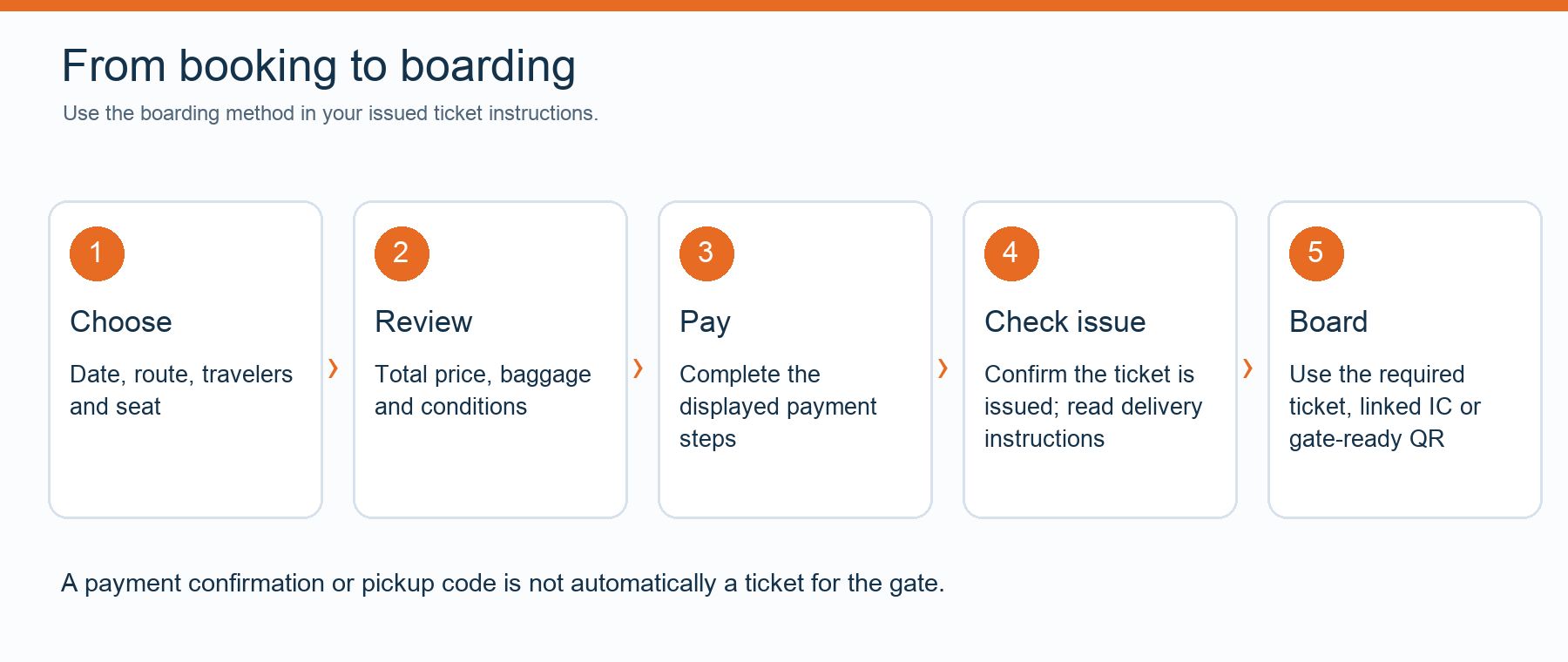
Our boarding guide and ticket pickup guide explain the next steps without assuming every product uses the same QR code.
Official sources and travel-date checks
Reviewed on 11 October 2026. Timetables, available seats and booking conditions can change. Check the operator guidance and the instructions issued with your ticket before travel.