Shinkansen seat classes, Tokaido Shinkansen, Japan Rail Pass, Ordinary Car, Nozomi bullet train, Tokyo to Osaka train priceShinkansen4 min read

Shinkansen Seat Classes: Reserved, Non-Reserved & Green Car [2026]

Shinkansen Seat Classes: Reserved, Non-Reserved & Green Car [2026]

Key Takeaway: Navigating the different Shinkansen seat classes is the secret to a stress-free Japan trip. The Tokyo to Osaka Nozomi train takes exactly 2 hours and 30 minutes, costing roughly 14,720 JPY for a standard reserved seat. Paying the minor upgrade fee over non-reserved guarantees you won't stand in the aisles during peak hours with your luggage. Skip the station queues and secure your Shinkansen tickets online before you even land in Japan.

Riding the bullet train is a quintessential Japanese experience. You glide past Mount Fuji at 320 km/h, eating an ekiben (station bento) while the world blurs by outside. But showing up at a massive transit hub like Tokyo Station without a plan can quickly turn that dream into a stressful scramble. Understanding the differences between seat types, luggage rules, and ticketing options is crucial for a smooth journey.

Comparing Shinkansen Seat Classes for 2026

Bullet trains generally offer three distinct tiers of service. Knowing exactly what you get for your yen helps you budget effectively and travel comfortably.

Ordinary Class (Standard)

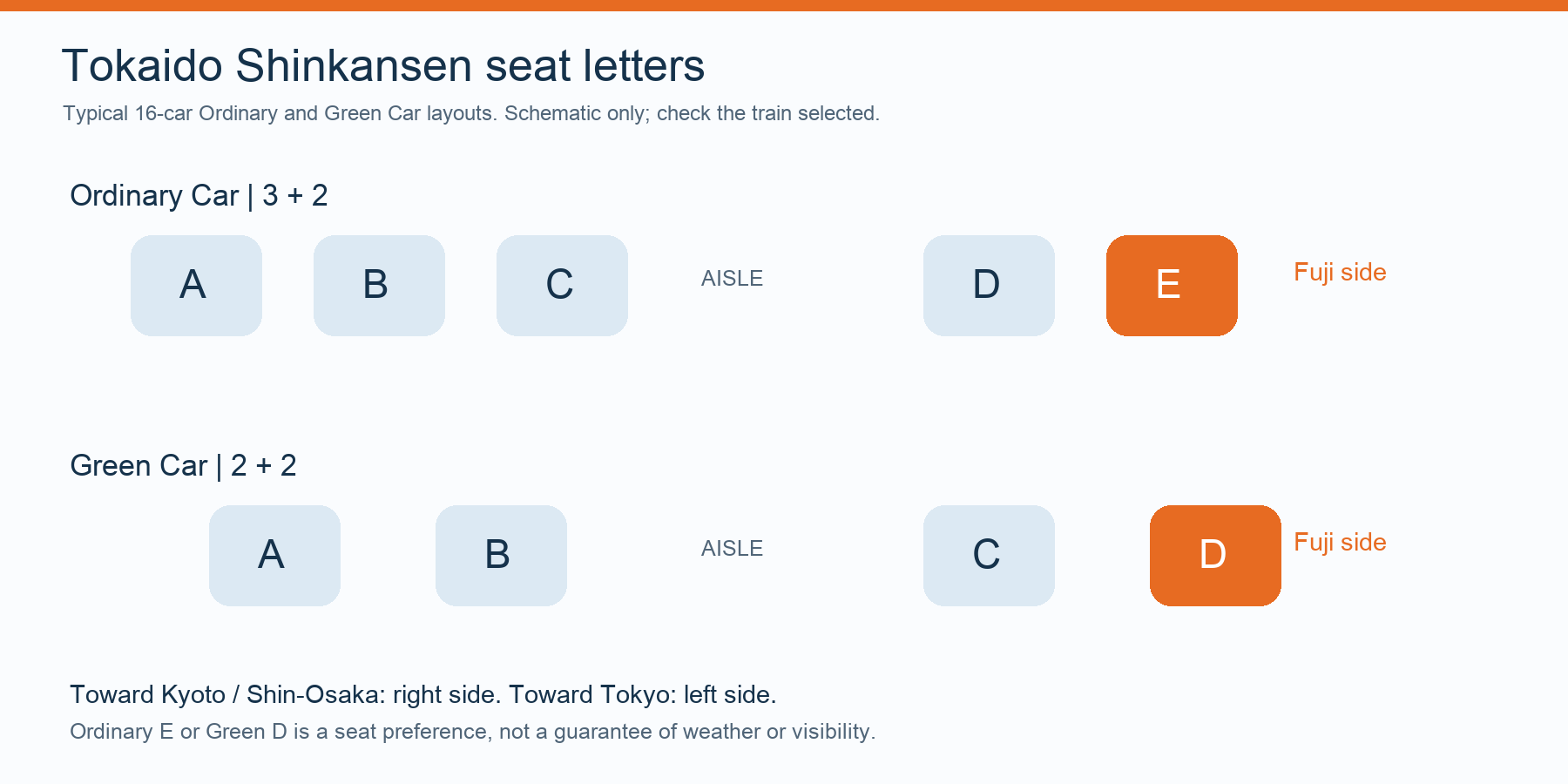
This is the standard economy seat, arranged in a 3-2 layout. It offers significantly more legroom than a typical airline economy seat, boasting roughly 104 cm of seat pitch. You have two choices here: reserved and non-reserved. Non-reserved cars (usually cars 1-3) save you a few hundred yen, but you risk standing for the entire 2.5-hour trip to Osaka if the train is full. A standard reserved seat from Tokyo to Kyoto costs approximately 14,170 JPY ($95 USD / €88 EUR) for 2026 travel. To guarantee you sit together with your family, book your reserved Shinkansen tickets online well ahead of your travel date.

Green Car (First Class)

Think of the Green Car as domestic first class. The layout switches to a spacious 2-2 configuration. Seats are wider, recline further, and feature plush footrests and reading lights. You also get a quieter cabin, as these cars are rarely crowded and heavily favored by business travelers. A Tokyo to Osaka Green Car ticket runs about 19,590 JPY ($130 USD / €120 EUR). If you want that extra comfort after a long international flight, you can easily secure your Green Car upgrade through our portal.

Seat Class Comparison Table

Seat Class Layout Seat Pitch Power Outlets Tokyo-Osaka Est. Price (2026)
Non-Reserved (Ordinary) 3-2 104 cm Window seats only (older trains) ¥13,870 ($92)
Reserved (Ordinary) 3-2 104 cm Window seats / All seats (N700S) ¥14,720 ($98)
Green Car 2-2 116 cm All seats ¥19,590 ($130)
Gran Class 1-2 130 cm All seats N/A (Tokaido Line)

Navigating Oversized Luggage Rules

Japan Railways strictly enforces luggage limits to keep aisles clear. If your suitcase's total dimensions (height + width + depth) measure between 160 cm and 250 cm, you must reserve a specific "Oversized Luggage Seat." These are the last row of seats in a train car, giving you the space directly behind your seat to wedge your heavy bags. If you bring oversized luggage on board without this specific reservation, conductors will charge you a 1,000 JPY penalty fee and move your bags out of your sight. Skip the hassle and reserve your oversized luggage seats when you buy your tickets.

Insider Tip: Always request Window Seat E (or Seat D in Green Cars) when traveling from Tokyo toward Kyoto or Osaka. This specific side of the train provides an unobstructed view of Mount Fuji exactly 40 to 45 minutes after departing Tokyo Station. Keep your camera ready as you pass Shin-Fuji station.

Onboard Amenities and Food Options

Modern Shinkansen trains, specifically the newer N700S models rolling out heavily through 2026, feature power outlets at every single seat. Older N700A models only have outlets at the window seats and the very front or back rows. Free onboard WiFi ("Shinkansen Free Wi-Fi") is available across the network, though connection speeds will drop when rocketing through mountain tunnels.

Food logistics have changed dramatically. Traditional food carts pushing through Ordinary cars on the Tokaido Shinkansen (Tokyo to Osaka) have been completely discontinued. You must buy your snacks, drinks, and bento boxes at the station platforms before boarding. Green Car passengers, however, have a special perk: a QR code on the seatback allows you to order hot coffee, the famous super-hard vanilla ice cream, and snacks directly to your seat via your smartphone.

Tags:Shinkansen seat classesTokaido ShinkansenJapan Rail PassOrdinary CarNozomi bullet trainTokyo to Osaka train price