
Trenes en Japón: Shinkansen, trenes locales y metros
La red ferroviaria japonesa incluye Shinkansen, trenes exprés limitados, locales y rápidos, metros y compañías privadas. Elija según la distancia, la ruta, sus necesidades de asiento y la tarifa completa.
Principales tipos de trenes en Japón
Trenes de alta velocidad Shinkansen
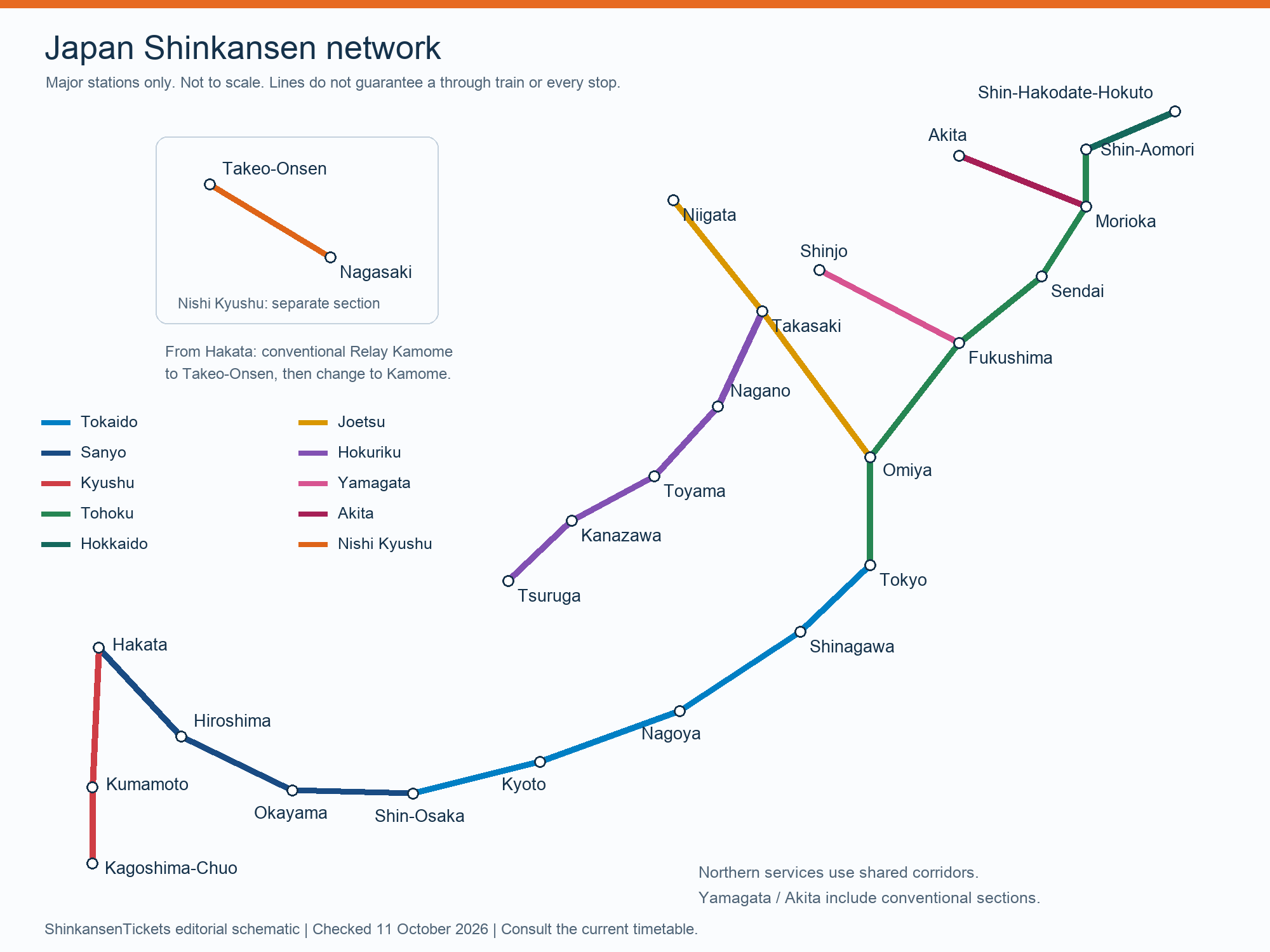
El Shinkansen conecta grandes ciudades por líneas exclusivas de alta velocidad. Suele ser la opción más sencilla para Tokio–Kioto, Tokio–Shin-Osaka o Shin-Osaka–Hiroshima. Los nombres, paradas y normas de asientos varían según la línea; compruebe el servicio y su destino antes de subir.
Use el mapa y guía de rutas Shinkansen de Japón para comparar las principales líneas y estaciones. Cuando esté listo para viajar, busque rutas Shinkansen y opciones de billetes disponibles.
Trenes exprés limitados
Los trenes exprés limitados conectan aeropuertos, ciudades regionales y destinos sin servicio directo de Shinkansen. Paran en menos estaciones que los trenes locales o rápidos y pueden exigir tarifa básica más suplemento de exprés limitado. Algunos servicios requieren reservar todas las plazas; otros incluyen coches sin reserva.
Trenes locales, rápidos y de cercanías
Los trenes locales paran en todas las estaciones. Los rápidos, rápidos especiales y servicios similares omiten algunas paradas, pero suelen usar las mismas vías y andenes. Compruebe siempre la pantalla de salidas: un tren más rápido puede no parar en su destino.
Los coches urbanos de cercanías suelen tener bancos largos para dejar espacio de pie. Los asientos suelen ocuparse por orden de llegada, salvo en las zonas prioritarias claramente señaladas.
Metros y compañías ferroviarias privadas
Tokio, Osaka, Kioto y otras ciudades combinan metros municipales con redes JR y compañías privadas. Cambiar de operador puede exigir pasar por otra barrera o pagar una tarifa aparte. Los números de estación, colores de línea y logotipos ayudan a distinguir rutas con nombres similares.
Entender los billetes de tren japoneses
Tarifa básica y suplementos exprés
Un trayecto local suele necesitar solo la tarifa básica. Un viaje en Shinkansen o exprés limitado normalmente incluye la tarifa básica más un suplemento exprés. Pueden figurar en un billete combinado o en billetes separados. Si recibe dos billetes de papel para el mismo viaje, introdúzcalos juntos cuando así se le indique en el acceso y recójalos al otro lado.
Tarjetas IC para viajes locales
Las tarjetas IC recargables son prácticas en muchos trenes locales, metros y autobuses. Acerque la tarjeta al entrar en el origen y al salir en el destino. La cobertura es amplia, pero no universal; una tarjeta IC sola no sustituye todos los billetes de Shinkansen ni de exprés limitado con reserva.
Reserva online, códigos QR y recogida de billetes
Una reserva online puede proporcionar un código QR válido en las barreras, un billete físico o instrucciones para recoger billetes antes de viajar. Siga el método de entrega indicado en la confirmación. Consulte la guía de reserva online de billetes Shinkansen y la guía de recogida de billetes antes de llegar a la estación.
Tipos de asientos Shinkansen
La disponibilidad depende de la línea y del tren. Ordinary y Green Car son clases de cabina; reservado y sin reserva describen la asignación del asiento. La clase ordinaria suele tener distribución 3+2 en el Tokaido, mientras que otras composiciones pueden ser distintas. Una reserva emitida asigna tren, coche y asiento concretos; las preferencias de los grupos dependen de la disponibilidad.
| Tipo de asiento | Qué esperar | Recomendado para |
|---|---|---|
| Sin reserva | Asientos por orden de llegada en los coches designados, cuando se ofrecen | Viajes flexibles fuera de periodos concurridos |
| Ordinario reservado | Tren, coche y asiento asignados en el billete emitido | La mayoría de visitantes, grupos y viajes en temporada alta |
| Green Car | Cabina prémium con más espacio personal; las instalaciones varían según el tren | Viajes largos y pasajeros que priorizan la comodidad |
| GranClass | Asientos prémium en determinados trenes; los servicios a bordo varían | Viajes prémium en los servicios del norte y del este que la ofrecen |
GranClass se ofrece en determinados trenes Tohoku, Hokkaido, Hokuriku y Joetsu, no en los servicios Tokio–Kioto. Las bebidas, comidas y atención a bordo varían; algunos trenes GranClass ofrecen solo el asiento. Supreme Class, un producto diferente de cabina privada, comenzó en determinados servicios Tokaido/Sanyo el 1 de octubre de 2026. Un servicio ferroviario solo está disponible mediante este sitio cuando aparece en las opciones reales de reserva.
Para una comparación más detallada, consulte la guía de clases de asientos Shinkansen.
Encontrar su tren
Compruebe el operador, la línea, el nombre del tren, sus paradas y el andén en la pantalla de salidas. Siga el método de embarque emitido, localice la marca de su coche y deje bajar a los pasajeros antes de subir. Consulte la guía de embarque para conocer el proceso completo.
Equipaje, accesibilidad y normas de convivencia
Equipaje
Coloque los bolsos pequeños en el portaequipajes superior o delante de usted sin bloquear los pasillos. En los Shinkansen Tokaido, Sanyo, Kyushu y Nishi Kyushu, una maleta ordinaria cuyas dimensiones sumadas superen 160 cm y no excedan 250 cm requiere un asiento con zona para equipaje de gran tamaño. Una maleta de exactamente 160 cm no supera el umbral. No se admite equipaje ordinario de más de 250 cm. El límite general es de dos bultos por pasajero, cada uno de hasta 30 kg y 2 m de largo, excluidos los pequeños efectos personales. La prueba de almacenamiento sin reserva en los vestíbulos de algunos trenes Tokaido/Sanyo no elimina la obligación de reservar para maletas de gran tamaño.
Accesibilidad
Las estaciones principales suelen tener ascensores, aseos accesibles y asistencia del personal, pero los recorridos de transbordo pueden ser largos. Los viajeros que necesitan ayuda para embarcar deben prever más tiempo y contactar con el operador correspondiente con antelación cuando sea posible.
Normas de convivencia
Haga cola detrás de las marcas del andén, deje bajar a los pasajeros, mantenga bajo el sonido y deje libres puertas, pasillos y zonas de equipaje. Use las papeleras designadas o lleve consigo la basura.
Planificar su viaje en tren por Japón
Nozomi exige reservar todos los asientos durante los periodos de máxima demanda especificados, incluidos fines de semana festivos adicionales en 2026. Un JAPAN RAIL PASS nacional por sí solo no cubre Nozomi ni Mizuho; también se necesita el billete NOZOMI MIZUHO correspondiente, adquirido por separado. Los pases regionales tienen condiciones distintas.
Referencias oficiales: normas de equipaje de JR Central, fechas de máxima demanda Nozomi, billetes especiales JAPAN RAIL PASS, GranClass y Supreme Class.
¿Listo para planificar su viaje? Busque rutas Shinkansen y opciones de billetes para su fecha de viaje.